Aviation watches are so much more than a timepiece. These watches evolved from actual issues that pilots had in the cockpit, such as the need to read the time quickly or calculate speed, distance, fuel usage, and time-zone differences. Wristwatches from Cartier, Longines, Zenith, IWC, Breitling and Rolex were iconic and helped make the wristwatch a useful aviation tool and eventually a symbol of flight.
In this article, we will take a look at how aviation influenced watchmaking and why some pilot watches became aviation history. At Leitzeit, we believe our appreciation for watchmaking starts with understanding the ideas, engineering, and stories behind the timepieces we wear.
What Are Aviation Watches?
Aviation watches are watches that are made specifically for the needs of pilots, navigators, and aviation professionals, and they often have highly readable dials, durable construction, chronographs, GMT displays, or navigation tools. Their designs are more functional and easy to read than just decorative.
Pilots in the early days did not have as many electronic instruments as today's pilots. They might use a mechanical watch to keep track of flight time, engine time, or navigation calculations. As aviation began to grow, watchmakers responded by creating larger dials, glowing markers, rotating bezels, antimagnetic protection, and more.
For instance, IWC's 1936 Special Pilot's Watch featured a rotating bezel, an antimagnetic escapement, shatter-resistant glass and high-contrast luminous hands and numbers. Aviator watches have continued to evolve while retaining their focus on legibility and functionality.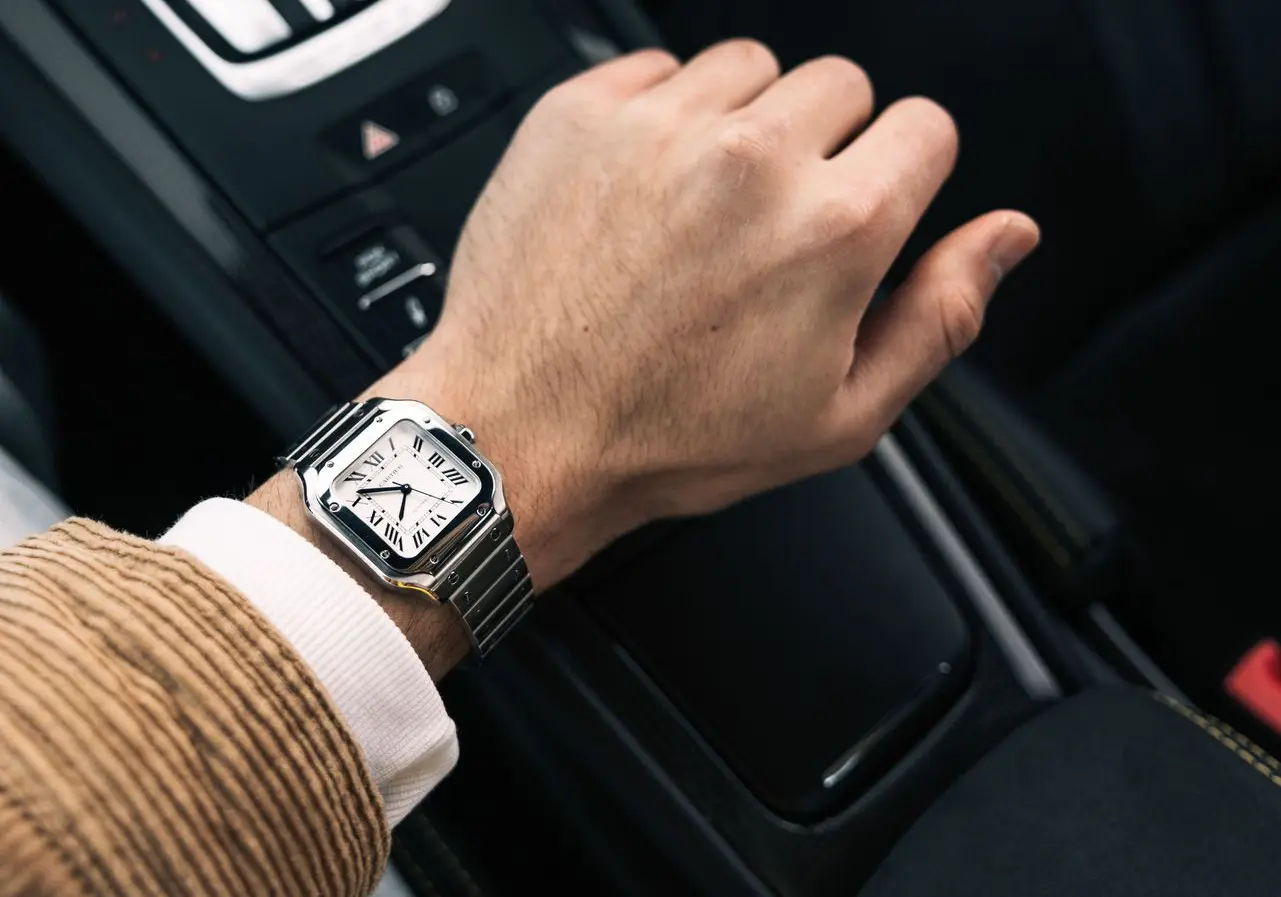
Why Accurate Timekeeping Was Essential in Early Aviation
Early pilots used accurate timekeeping to time the duration of flight as well as to assist navigation and to coordinate important parts of a flight. In the pre-digital cockpit era, pilots relied on mechanical instruments and precise calculations to a much greater extent.
Consider a pilot who is flying a long distance with limited navigation equipment. If the exact time is known, the watch could aid the pilot in estimating distance traveled, monitoring fuel usage, and working with other navigation information.
Early flying also created a demand for watches that were legible without diverting a pilot's attention from the task of flying. The idea of a simple high-contrast dial was more appropriate than a complicated decorative design.
According to IWC, its early pilot watches enabled pilots to keep track of flight time, engine operating hours and were used for navigation in visual flights.
The Birth of the Pilot Watch
The pilot watch was the result of aviators' need for quick access to accurate time and for both hands to be free for flying. This functional requirement contributed to the transformation of the wristwatch from a fashion item to a functional tool.
An early and well-known example of this type of watch is the Cartier. In 1904, Louis Cartier designed a wristwatch for Brazilian aviator Alberto Santos-Dumont, who needed to know the time while flying without having to put his hand in his pocket. Cartier calls the watch one of the first wristwatches and relates its invention to Santos-Dumont's needs as an aviator.
This little tweak made a huge difference. A wristwatch provided the pilot with instant time information without obstructing the use of his hands on the aircraft controls.
How Aviation Influenced Watch Design
Aviation drove watchmakers to create designs that could be quickly read, operated and trusted by pilots. From this practical application came many features that are now characteristic of pilot watches.
Aviation Watch Feature | Why It Mattered |
Large Arabic numerals | Assisted pilots in reading time rapidly |
High-contrast dial | Improved the visibility of the hands and markers |
Luminous markers | Low light reading support |
Large crown | Made adjustments easier with gloves |
Chronograph | Enables pilots to record the time passed |
GMT function | Assisted to follow over one time zone |
Rotating bezel | Helped with timing or navigation calculations |
Antimagnetic protection | Assisted with the maintenance of mechanical accuracy of equipment |
These concepts are still evident in today's aviation watches. Zenith's Pilot Type 20 features cathedral hands, oversized luminous Arabic numbers and an oversized onion crown, a feature of early aviation instruments.
Cartier Santos: One of Aviation’s Earliest Wristwatches
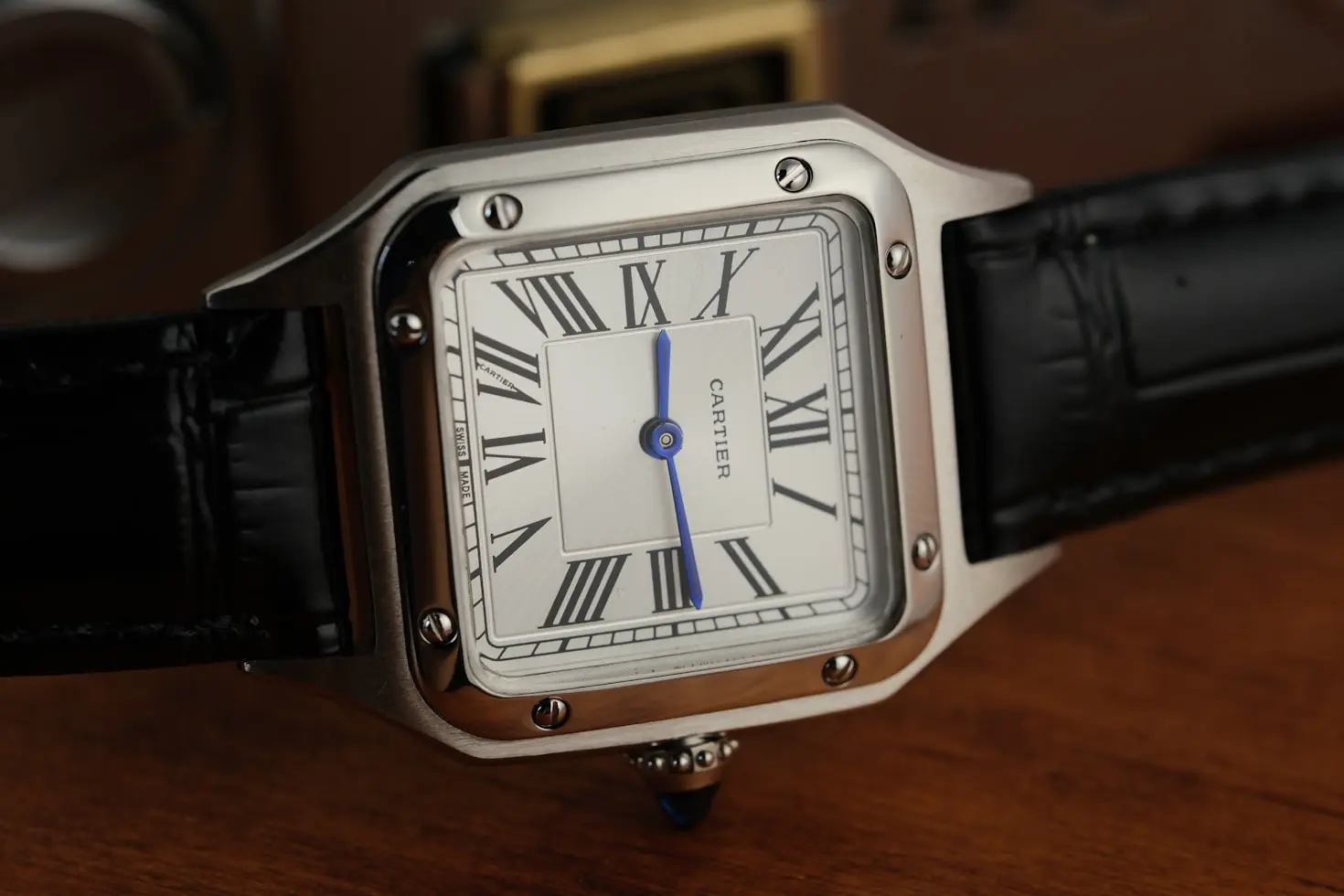
The Cartier Santos demonstrates the influence of aviation on the practical wristwatch. In 1904, Louis Cartier invented a wristwatch for Alberto Santos-Dumont, who wished to know the time during his flights.
Up until this time, people knew the time by using pocket watches. However, it would be difficult for a pilot to get to a pocket while flying an aircraft. The wrist was a much more functional place.
The Santos is also a testament to the fact that an aviation tie-in doesn't necessarily have to be a complicated aviation function. Its significance lies in the problem it solved: providing aviators with quick access to time.
Though its design is not that of the large instrument-style pilot watches that followed, the Santos is an important addition to aviation-watch history.
Longines Lindbergh Hour Angle Watch
The Longines Lindbergh Hour Angle Watch went one step further in aviation timekeeping and introduced a tool to help with celestial navigation. It came about as Charles Lindbergh worked on the idea after his 1927 solo transatlantic flight from New York to Paris, timed by Longines.
The watch was used in the hour-angle method to calculate the longitude for the pilots. It wasn't just a watch but also a navigation system.
According to Longines, Lindbergh conceived the watch after his transatlantic flight, and the company later manufactured it. The modern version maintains the original diameter of 47.5 mm and features a modern self-winding movement.
An important step in the evolution of aviation watches was incorporating the watch into the navigation process itself, as in this example.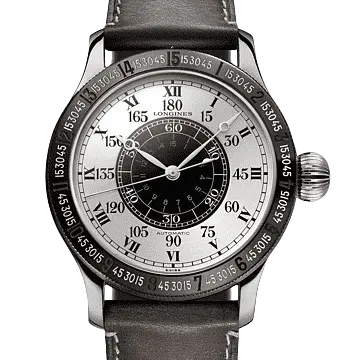
The Rise of Military Pilot Watches
Military aviation helped to develop reliable watches, easy to read, and could withstand extreme conditions. Military pilots and navigators required instruments that would function reliably, not just be good-looking.
Watchmakers responded with clear dials, luminous details, durable cases, and protection from environmental issues.
Another challenge was magnetic fields. Interference with mechanical movement was a special concern, as cockpit equipment might affect the magnetic field.
The Mark 11 from IWC is one of the best examples. The British Royal Air Force asked for a watch that could be used for navigation and which would be protected from magnetic fields, and IWC created the Mark 11 with a soft-iron inner case to protect the movement from magnetic influences. The Mark 11 came into production in 1948 and served for many decades.
Zenith Type 20 and the Modern Pilot Watch
The Zenith Pilot Type 20 is an early aviation instrument in a modern wristwatch. Zenith links the collection to its early aviation instruments and to its pioneers like Louis Blériot.
Several features of the pilot watch are used in the design: a robust round case, a large onion crown, large luminous Arabic numerals and cathedral hands.
The purpose of these features is evident. A large face is easier to adjust, and the large numbers and glowing hands make it easier to read the time quickly.
Zenith also linked Blériot's 1909 crossing of the English Channel. The brand states that its early aviation instruments were flown with the pioneers of flight and that Pilot Type 20 models were heavily influenced by this.
IWC and the Evolution of Professional Pilot Watches
IWC has a long history of pilot's watches designed for military and professional aviation, including the Special Pilot's Watch of 1936, the Big Pilot's Watch of 1940 and the famous Mark 11 of 1948.
The Mark 11 was especially significant as the RAF needed protection against magnetic fields and good legibility. To address those needs, IWC equipped this watch with a soft-iron inner cage and a high-contrast luminous dial.
The Mark 11 is also an example of how a military watch can impact civilian watch design. The black dial, the bold numbers and the clear layout were a model for generations of pilot watches.
IWC later carried on with that design philosophy with the Mark series and contemporary Pilot's Watches. The Mark XX is the newest addition to the Mark family launched by the brand in 2022.
Breitling Navitimer: The Pilot’s Calculation Watch
The Breitling Navitimer was unique in that it transformed the wristwatch into a miniature flight calculator. In 1952, the Aircraft Owners and Pilots Association (AOPA) approached Willy Breitling with a request for a chronograph that would suit pilots and so the Navitimer was born.
It was characterized by its circular slide rule that enabled pilots to use it for calculations of speed, distance, fuel consumption, and rates of climb and descent.
The design was also sensible in the cockpit. Breitling gave the watch an above average-sized case for the time and large numerals for easy readability. The rotating bezel featured small beads for the pilots to use when making adjustments.
Thus, the Navitimer was more than just a pilot watch. It wasn't just the time-telling machine for the pilot. It assisted the pilot in the use of numbers.
That combination resulted in one of the most iconic aviation watches of all time: the Navitimer. Breitling says the AOPA later adopted the design for their official timepiece, and pilots worldwide embraced it.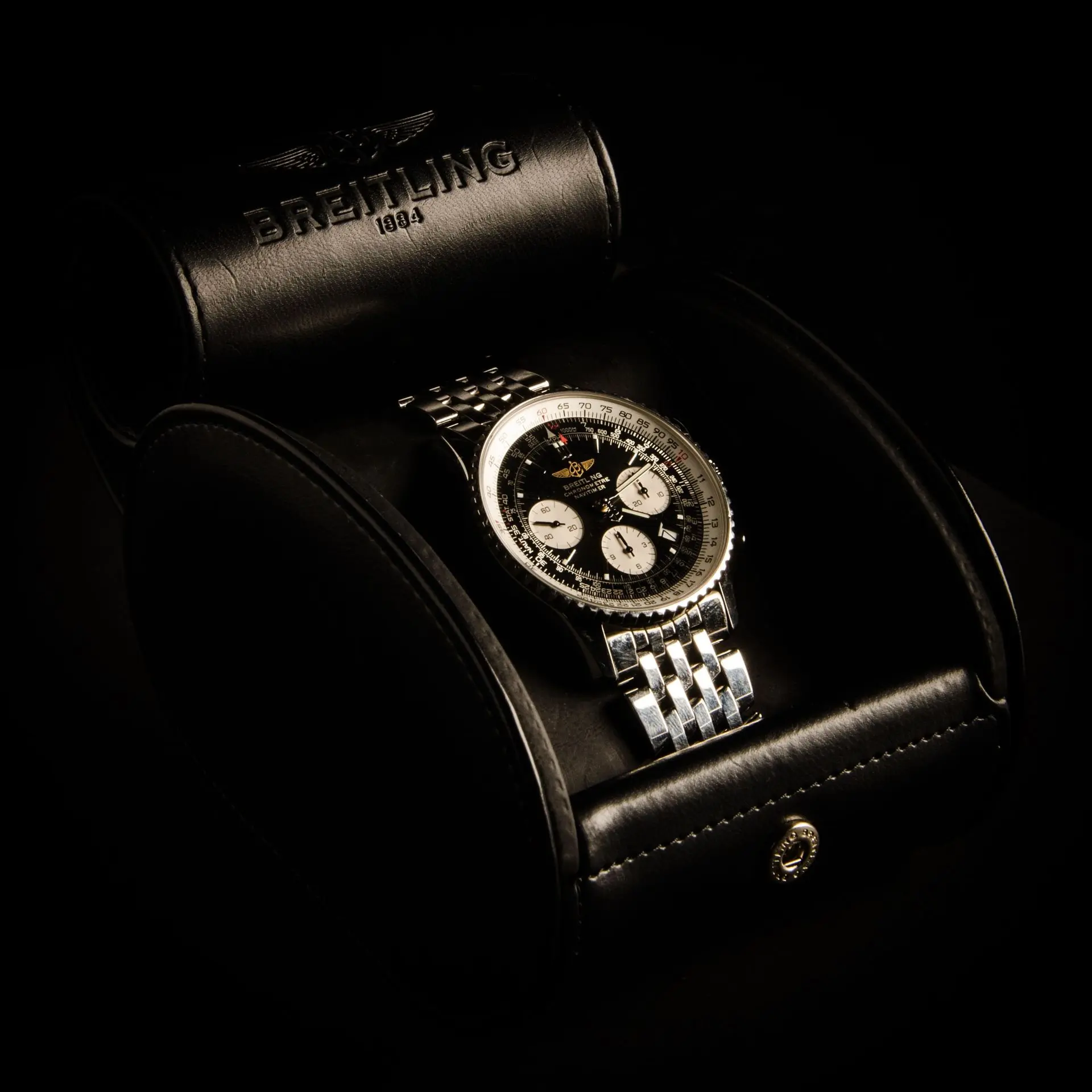
Rolex GMT-Master and the Age of Commercial Aviation
The Rolex GMT-Master solved a new aviation challenge—navigating through multiple time zones. During the 1950s, the growing number of intercontinental flights required pilots and flight crews to keep track of multiple times simultaneously.
In 1955, Rolex launched the GMT-Master as a navigation tool for those who traveled around the world. The watch showed two time zones and was linked to the Pan American World Airways (Pan Am).
The watch also represented a genuine connection to long-distance flight. According to Rolex, the crew of the first nonstop flight between New York and Moscow by Pan Am in 1959 used the GMT-Master. This change illustrates how aviation watches have evolved alongside the aviation industry.
The first pilot watches were mainly used for displaying time and navigation. The increasing speed of international travel and the significance of time zones prompted later watches.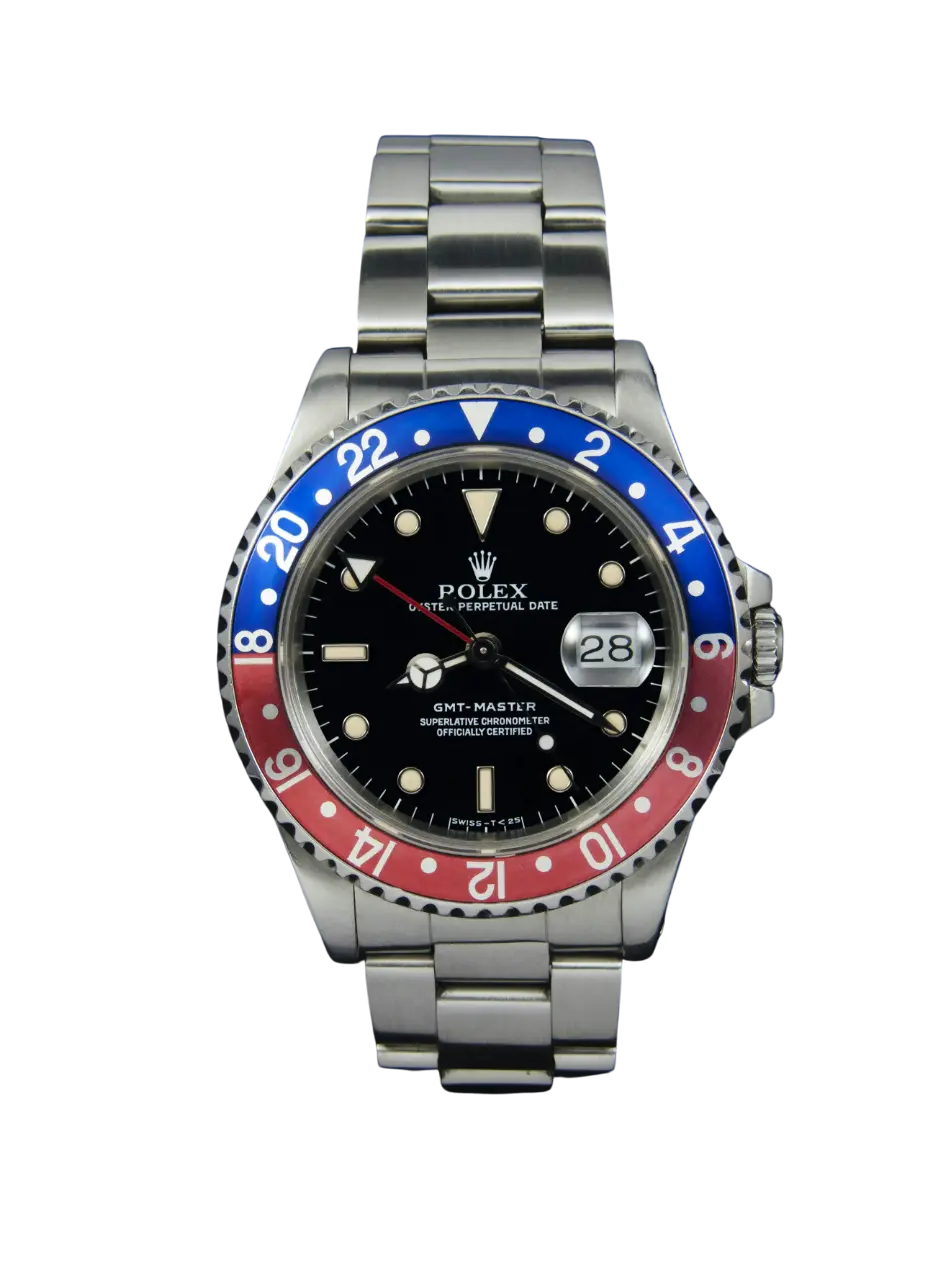
The Role of Chronographs in Aviation
A chronograph is an instrument that a pilot uses to measure elapsed time, and it can be used for timing operations during flight. A chronograph is a watch that has a stopwatch feature along with the standard timekeeping function.
Elapsed time measurements could be used by pilots to time procedures, navigation steps or other flight calculations.
IWC created pilot watches with slide rules as aviation technology progressed, and the Breitling Navitimer was a chronograph with a slide rule. For instance, IWC's 1992 Double Chronograph was able to mechanically time two periods.
Although most of the calculations are made by electronic cockpit systems today, the chronograph is one of the most powerful design connections between today's watch and aviation history.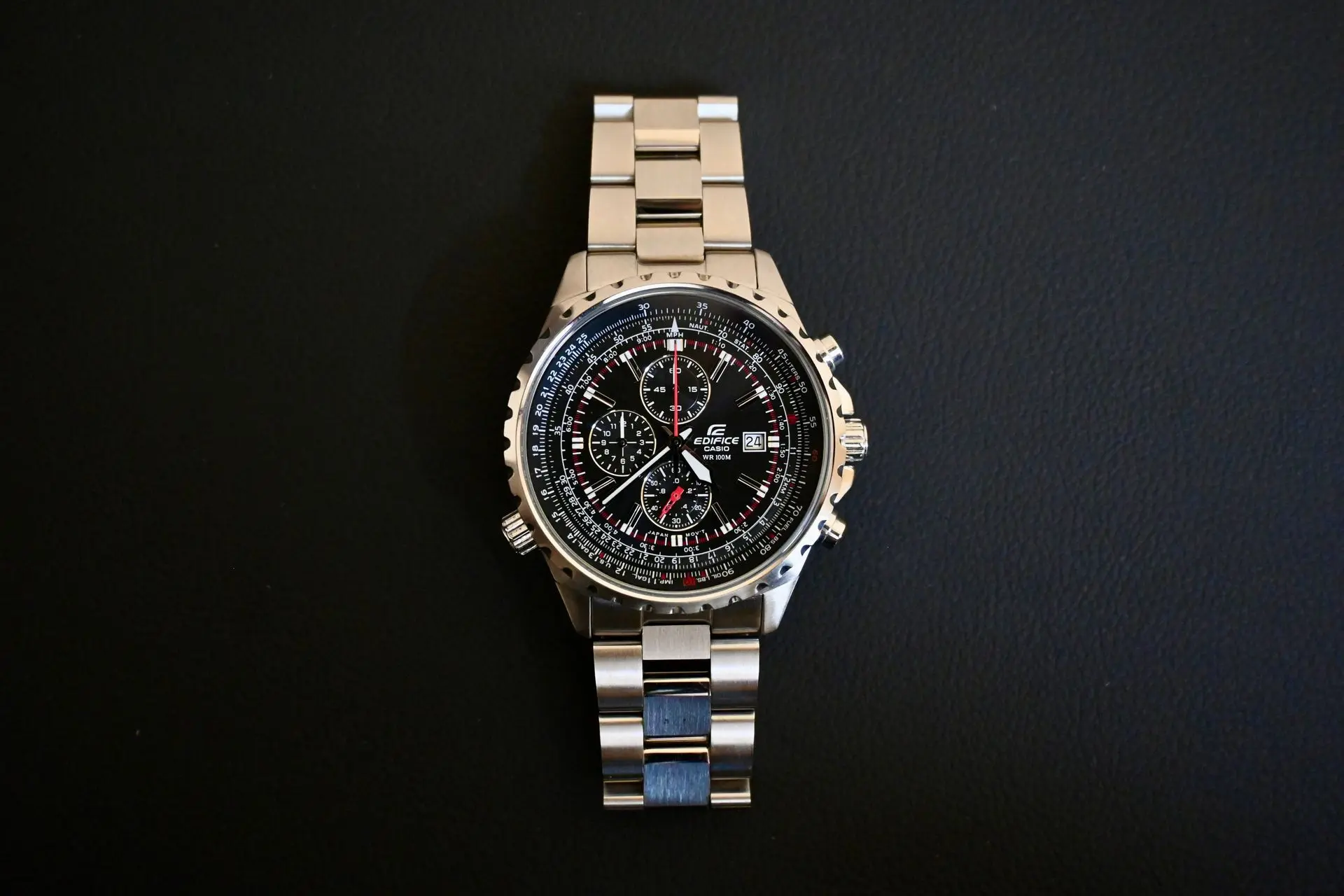
GMT Watches and Global Aviation
GMT watches gained significance with the growing linkage of the cities, countries, and time zones through aviation. A GMT display could be used by a pilot or crew member to track a second reference time, with the main hour hand displaying local time.
This function was particularly useful in the expansion of commercial aviation internationally.
The Rolex GMT-Master is a particularly notable example. It was created by Rolex for professionals that would travel through multiple time zones and was used by pilots for Pan Am in the early jet-age era.
Although it may not be necessary in today's world to use a mechanical GMT watch to keep track of time zones, it certainly lends a strong sense of aviation history to a watch.
Why Pilot Watches Have Oversized Crowns
Large crowns often appear on pilot watches, as pilots need to adjust them quickly, even while wearing gloves. Thick gloves may make it difficult to hold onto a small crown.
For this reason Zenith's Pilot Type 20 features an oversized onion crown, and IWC's historical pilot designs also featured large onion crowns that were easier for pilots to manipulate.
That big crown is now a visual trademark of the pilot watch. Although a modern watch may never be worn with gloves, the feature remains as a reminder of the watch's aviation roots.
Why Aviation Watches Use Highly Legible Dials
A pilot watch should have a dial that you can read at a glance. That’s why many aviation watches have big numbers, high contrast, minimal designs, and glowing components.
Think about reading a watch while flying on a busy flight. A fancy dial with many decorations may cause some delay. A clear black dial with white numbers and bright hands provides the information much quicker.
IWC's Mark 11 featured a high-contrast dial with luminous elements and Zenith's Pilot Type 20 had oversized luminous Arabic numerals and hands.
This design principle is helpful even for those who wear their pilot watch for terrestrial activities.
From Mechanical Navigation Tool to Aviation Icon
Although today's aircraft don't rely on mechanical wristwatches as much as the early pilots, aviation watches remain a testament to the technology and design concepts of that time.
Digital navigation systems, GPS, electronic flight instruments, and advanced cockpit computers now perform functions that early pilots used to perform by hand.
Mechanical watches remained useful after that change. Instead, it changed their role. A working watch can now be a symbol of aviation history. The slide rule of the Navitimer, the antimagnetic construction of the Mark 11, and the dual-time display of the GMT-Master each represent a particular aviation requirement.
How Modern Aviation Watches Preserve Historic Designs
Modern aviation watches are the fusion of the traditional pilot-watch qualities with modern movements, materials and manufacturing.
You may see a modern pilot watch with:
- Oversized Arabic numerals
- Luminous hands
- A large crown
- A black or high contrast dial
- A chronograph
- A GMT hand
- A leather or fabric belt
- A rugged case
It's the difference in modern engineering. Modern watches can be made of better materials, run more accurately, be more durable, and be more comfortable to wear, all while maintaining the look of historic aviation instruments.
This advancement is the reason vintage-style pilot watches are still in trend.
What Makes an Aviation Watch Different From a Field or Dive Watch?
Aviation watches are mostly about rapid time reading, navigation, elapsed time or multiple time zones, whereas field and dive watches address other issues.
Watch Type | Main Purpose | Typical Features |
Aviation Watch | Flight and navigation | Large numerals, GMT, chronograph, slide rule |
Field Watch | Land use and military practicality | Simple dial, durability, compact design |
Dive Watch | Underwater timing | Water resistance, rotating dive bezel, strong lume |
Racing Chronograph | Motorsport timing | Chronograph, tachymeter, sporty layout |
The lines may intersect. A modern pilot watch can be used as a watch every day, and a field watch can be used while traveling.
The difference lies in the design problem each watch was attempting to solve.
The Most Important Features to Look for in Aviation Watches
When shopping for a watch for aviation today, the first things to consider are legibility, useful complications, size and comfort, and quality of construction—not necessarily the most complicated design.
1. Legibility
Select a dial that you can read easily and fast. Contrast and readability of numbers are more important than visual complexity.
2 GMT or Dual-Time Function
If you travel frequently or communicate regularly with people in different time zones, then it makes sense to have a GMT display.
3. Chronograph
A chronograph provides elapsed-time measurement. It's a good choice for someone who likes the functional style of aviation instruments.
4. Luminous Details
Good lume will help you see the watch in low light.
5. Comfortable Crown
A large crown can add classic pilot-watch flair to a watch, but it should be comfortable to wear on your wrist.
6. Reliable Movement
Precision is the beginning of aviation heritage. Find a movement that has a good track record for reliability and accuracy.
7. Practical Size
Don't necessarily select a large case because large cases were used by historical pilot watches. Choose a size that will be comfortable for your wrist and lifestyle.
The Lasting Influence of Aviation on Watchmaking
Aviation forced watchmakers to develop watches that were accurate, easy to read, rugged, and functional. Many of the features developed for pilots are still important in aviation watches today.
Cartier made the wristwatch more useful to aviators. Longines linked watches to the stars. The IWC Mark 11 focused on accuracy, readability, and protection against magnetic fields. Breitling adapted the Navitimer as a flight calculator, and Rolex developed the GMT-Master to assist people in keeping track of various time zones.
These watches all addressed a specific need of the time and therefore remain relevant today. Most of the functions of these watches are now being handled by electronic systems on modern aircraft. Nevertheless, there are still some design features that they have that are easily identifiable. Large numbers help to read the time, large crowns help to use gloves, GMT hands for another time zone and chronographs for elapsed time.
You don't have to be a pilot to appreciate these watches. An aviation watch can be special with a clear dial, reliable mechanical movement and interesting history. They are also sought after by collectors for many of them being related to actual events and challenges in aviation history.
We love this watchmaking with a purpose at Leitzeit. We believe our watches are a celebration of the watchmaking past and also a reflection of how mechanical watches are used and enjoyed today by collectors.
Conclusion: The Watches That Flew With Aviation
Aviation watches chronicle the evolution of watchmaking to meet the needs of flight. Whether it was to tell time during flights or to perform complex navigation calculations and to deal with multiple time zones, each major development brought new opportunities for watchmakers.
The Cartier Santos linked the wristwatch to the early days of flying. The Longines Lindbergh Hour Angle was used for celestial navigation. Zenith maintained the style of the first aviation instruments. IWC developed watches for military accuracy and antimagnetic properties. Breitling invented a wrist-borne flight computer, the Navitimer, and Rolex built a GMT-Master for the emerging world of international flying.
Contact us today to explore our Axis Mundi watch and discover the thought behind its design. At Leitzeit, our watches bring together precision, history, and thoughtful craftsmanship in a timeless way.
The most valuable aviation watch lesson is not a particular model. The most effective designs are those that address a problem, clarify information, and remain relevant beyond the current technology. That concept continues to influence modern horology and is one of the reasons why aviation watches are still so significant in the history of watchmaking.
FAQs
What makes a watch a pilot watch?
A pilot watch will typically feature a clear, easy-to-read face alongside some aviation-specific features or elements. This category features big numbers, high contrast, glow-in-the-dark hands, oversized faces, chronographs, and GMT time.
What was the first aviation watch?
Aviation watches evolved over time with the birth of flight and there is no one “first aviation watch.” The famous 1904 Santos-Dumont was one of the first wristwatches designed specifically for an aviator, and later, specialized designs were introduced that included navigation and cockpit functions.
What are the best-known aviation watches in history?
The most popular ones are the Cartier Santos, Longines Lindbergh Hour Angle, Zenith Pilot Type 20, IWC Mark 11, Breitling Navitimer, and Rolex GMT-Master. Together, they illustrate the impact of aviation on the development of the wristwatch from the early days of flight to the dawn of international air travel.
What is a GMT watch used for in aviation?
A GMT watch provides a second time zone, in addition to the local time. This proved to be particularly helpful in the jet age with the growth of commercial aviation in multiple time zones.
Why do aviation watches use chronographs?
A chronograph is a watch that can be used to time events and make calculations in flight. Some of the historic aviation watches featured chronographs as well as other calculation devices, like the Breitling Navitimer.
Are aviation watches still useful for pilots today?
Electronic cockpit systems are now used extensively by modern pilots, and a mechanical watch is no longer as critical as it used to be. But GMT, chronographs, and easy-to-read designs can still offer functionality, and some fans will value them more for their heritage and craftsmanship.