Traveling to another country can make timekeeping more complicated than you think. You may need to know the local time for your flight, your home country time for calling your family, or a different country time for attending an online meeting. This is where traveller watches can come in handy.
The most popular are GMT watches and world timer watches. Both help you track different time zones, but they do so in different ways. A GMT watch typically concentrates on a second time zone, and a world timer will display the time of various cities worldwide.
So, which one should you go for for your next trip? It depends on the frequency of travel, your daily needs and the number of time zones to follow. Let's compare both types of watches, discuss their key features, and assist you in choosing the best travel watch for your next adventure.
What Are Traveller Watches and Why Are They Useful for Travel?
Traveller watches are watches designed to assist travellers in keeping track of time in various time zones. They are particularly helpful if you are travelling abroad, working with people in other countries, or want to communicate with someone back home.
A standard watch displays the time in one time zone. This is great for everyday life, but sometimes when traveling abroad there is a need for more information. When landing in another country, you might need to change your schedule, call family or attend a meeting based on the country's time.
Traveller watches make these tasks easier by providing features to monitor multiple time zones.
For example, imagine you live in London and are traveling to Tokyo for a business trip. You need to know Tokyo's local time for meetings and transport while keeping track of London's time for calls with colleagues back home. A GMT watch or a world timer complication can help you check both without reaching for your phone every time.
These watches can also be used to:
- Monitor home time when travelling overseas.
- Make international business calls more easily.
- Organize activities in other countries.
- Navigate multiple time zones on extended foreign travel.
- Limit the time spent looking at your phone.
But all travelers don't require the same features. If you are a frequent traveler to one country and you only need to keep track of the time spent at home, a GMT watch might be sufficient. If you have to keep track of several countries and their time zones on a regular basis, a world timer might be more convenient.
The most important thing to look for in a traveller watch is the one that suits your needs and not necessarily the one with the most complicated display.
What Is a GMT Watch and How Does It Work?
A GMT watch is a watch that has two time zones, typically one of which is a 24-hour hand that shows the time in a different city or country. It provides an easy way to track two places without having to change the watch settings all the time.
GMT is the acronym for Greenwich Mean Time, which is a standard time traditionally used in Greenwich, London. Today, GMT is a term used frequently to describe watches that display an additional time zone with an extra hand and a 24-hour time ring.
The GMT hand rotates one full revolution in 24 hours, as opposed to a standard hour hand that makes two full rotations in 24 hours. This helps to identify day and night in the second time zone.
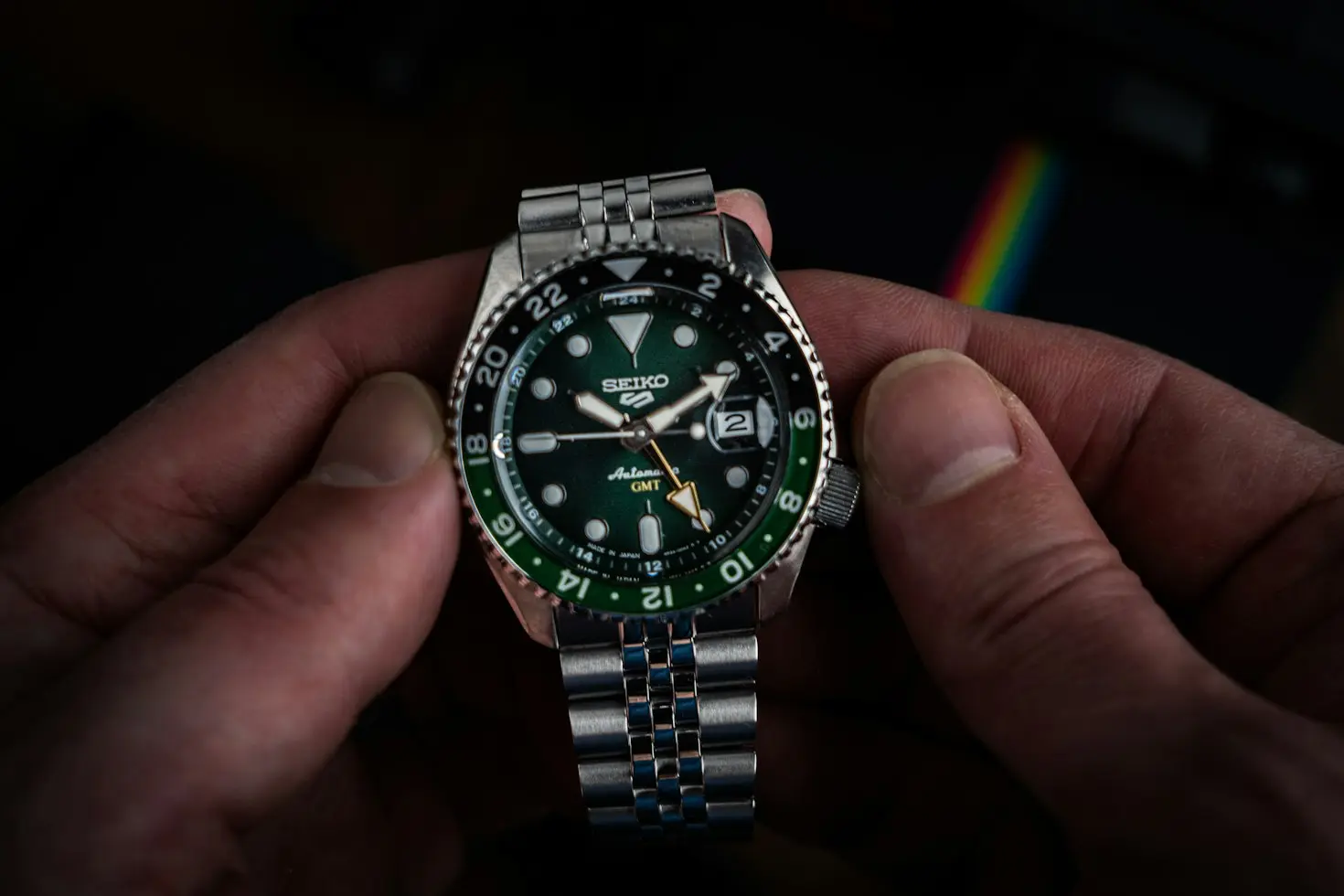
How Does a GMT Watch Display Two Time Zones?
There are three main components to a standard GMT watch:
- Local Hour Hand: It indicates the time at the local location.
- GMT Hand: Indicates the second time zone on a 24-hour clock.
- 24-Hour Scale: Aids in reading the second time zone and in differentiating between day and night.
There are also GMT watches with a rotating bezel. Depending on the model of the watch, it can be used to keep track of a third time zone.
- For instance, you are going from New York to Paris. The main hands can be set to the time in Paris while the GMT (Greenwich Mean Time) hand displays New York time. If you have to call your office in New York, you can easily determine if it's morning, afternoon, or late at night.
GMT watches also vary when it comes to adjusting the time. A traveller-style GMT allows for the local hour hand to be set apart from the GMT hand, making it easy when travelling across different time zones. An office-style GMT typically allows for easier adjustment of the second time zone without changing the primary local time.
These variations are significant if you are a frequent traveler. Not all GMT watches do the same thing, so before you select a GMT, find out how the movement changes time zones.
What Is a World Timer Watch and How Does It Work?
A world timer watch is a watch that shows the time in various time zones around the world, typically using a city ring and a rotating 24-hour dial. It allows you to compare times between different regions of the world in one watch face.
Usually, a GMT watch is geared toward a second time zone. A world timer is more general, displaying the difference in time between the selected city and multiple other cities.
Many of the traditional world timers have a ring of city names that correspond to different time zones. A 24-hour ring circles the dial, so you can see the time in a city.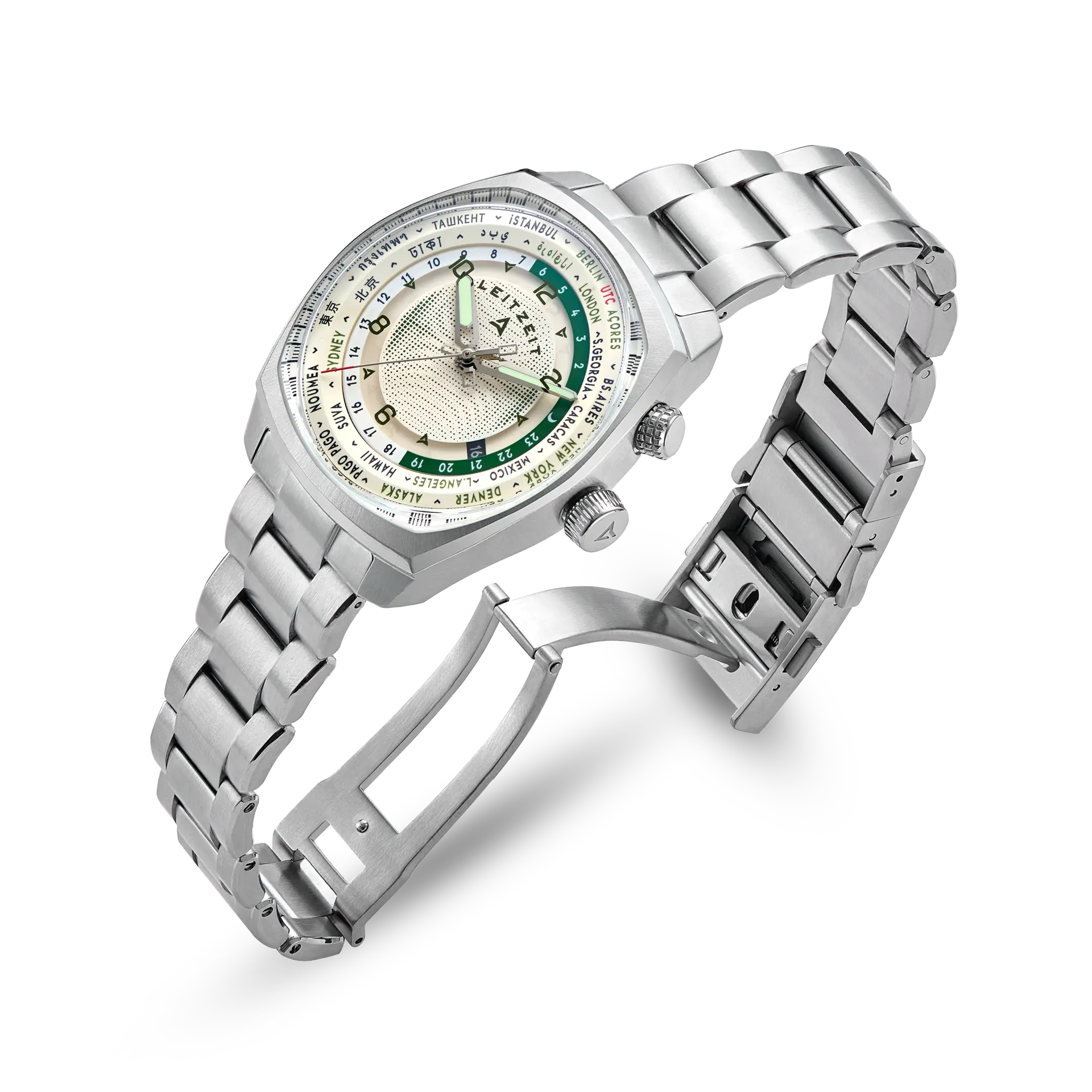
How Do You Read a World Timer Watch?
Most traditional world timers have two primary components, although they are different for each model:
- City Ring: Provides a list of representative cities in the various time zones.
- 24-Hour Ring: Displays the time in those zones, typically in a different color for day and night.
To read the watch, simply locate the city you want to see and view the corresponding time on the 24-hour scale. The dial then allows you to know the local time at that location.
Suppose you are running a business with customers in London, New York, Dubai and Tokyo. You need to set up a video call without having to ask each person to work out the time change. A world timer will allow you to see these locations at a glance, which will help you pick a time that suits everyone.
However, world timers may also appeal to mechanical watch lovers. Their dials are often a combination of city names, detailed scales, and moving parts in a well-composed design.
However, the additional information may make the dial more congested than the typical GMT watch dial. If you want a simple display, you might have to take some time to get used to reading a world timer.
Additionally, be aware that many world timers will have a representative city to represent a time zone, and not every country's time. Some models may have half-hour or 45-minute offsets, and daylight saving changes can make it difficult to calculate the time, so check what a particular model does.
GMT vs World Timer Watches: What Is the Difference?
The only real distinction between GMT and world time watches is the number of time zones they show and the way in which they show them. A GMT watch typically displays local time and one other time zone, while a world timer offers a wider perspective of various time zones around the world.
Both are good choices for handling international travel, and each are appropriate for a different lifestyle.
Feature | GMT Watch | World Timer Watch |
Main Purpose | Set up a second time zone. | See several time zones. |
Typical Display | Additional 24-hour hand/scale | City ring and 24-hour ring |
Time Zone Coverage | Typically two or sometimes three | 24 time zones, commonly used all over the world |
Dial Design | Usually quite easy to understand | Often more detailed |
Best Suited For | Frequent flyers and travelers with a home time zone to track | International tourists and those organizing international travel |
Time Adjustment | Depends on the GMT movement | Depends on the world timer mechanism. |
Everyday Use | Often easy to read local time and home time | Great for those who check multiple cities on a regular basis |
Which Watch Is Easier to Use?
A GMT watch can seem simpler since you are primarily concerned with the local time and only one other time zone. A world timer provides more information, but you may need to learn how to read the city ring and 24-hour scale.
A GMT watch, for instance, could provide you with all of the details you need if you live in one country and frequently work with a client in the United States. A world timer might save you more time if you schedule meetings with clients in the United States, Germany, Japan, and Australia.
Both watches are not necessarily superior. The final decision depends on your usage of time-zone information.
Which Watch Has the Better Design?
Some GMT watches are sportier and have a simpler look, while others feature more elegant designs. World timers often have more detailed dials as they provide more information.
This is a matter of personal taste. A GMT might be the choice for people who prefer a basic dial to easily view the time. If you're interested in technical aspects and prefer having multiple time zones on a single dial, a world timer might be a better fit.
Beware, dial complexity is not a measure of quality. Before deciding, test for readability, performance of movement, materials, and comfort.
Which Is Better for Travel: A GMT Watch or a World Timer?
If you're primarily concerned with knowing what time it is at your current location and at home, a GMT watch is probably a better option. If you need to keep tabs on multiple time zones during the day, a world timer might be more helpful.
The choice should be based on your travel habits.
Choose a GMT Watch If You:
- Travel to one destination at a time.
- Need to keep track of your home time.
- Make regular phone calls to family or friends overseas.
- Choose a plain dial that has an easy-to-read display.
- Looking for a watch that will be suitable for everyday use.
For instance, if you are traveling from London to Singapore for a week-long vacation, a GMT watch will help you keep both local time and home time in view.
Choose a World Timer If You:
- Make several trips abroad per year.
- Collaborate with clients and/or teams in several countries.
- Make periodic calls between continents.
- Would like to view multiple time zones at once.
- Enjoy a more detailed watch face.
For instance, a project manager coordinating teams in New York, London, and Singapore might find a world timer useful for checking different time zones and scheduling meetings that work for everyone.
What If You Travel Only Occasionally?
There's no need to have a fancy watch simply because you travel. If you travel internationally one or two times a year, then a basic watch or a GMT timepiece might be just what you need.
Think about your daily routine before spending more on additional functions. A world timer has more information, but only when you use it.
What Should You Look for When Choosing Traveller Watches?
The most effective traveller watches will be the ones that have the most beneficial time zone features, are easy to read, are comfortable to wear, have an accurate movement, and are durable enough to handle travel. Before selecting a model, think about your travel habits and what you would like to make traveling easier.
1. Is the Dial Easy to Read?
When you're in a hurry at an airport or getting ready for a meeting, you can easily check the time on a clear dial.
Check for legible hour markers, easy-to-read hands and sufficient contrast between the dial and the hour markers. If you select a world timer, ensure that the city ring and 24-hour scale are easy to see.
Expert Tip: Check out the watch face in bright daylight and also dim lighting. A complicated display might be a show-stopper in pictures but a burden in real life.
2. How Easily Can You Adjust the Time?
The movement dictates the manner in which the time is changed and the various additional functions of the watch are used.
An independently adjustable local hour hand can be useful if you often cross time zones, as a GMT watch can be useful. Use a world timer and read the instructions to find out how you set and read the different cities.
Not all watches that have a travel complication have the same adjustment features.
3. Is the Watch Comfortable for Long Journeys?
You can wear your watch for hours on a flight, on a road trip, or for a business meeting. The correct size, case, weight and fit of the strap can make all the difference.
Look for a watch that is comfortable on the wrist and doesn't feel too heavy or bulky. A watch should aid your journey, not be another thing you notice throughout the day.
4. Can It Handle Your Travel Routine?
Your watch can take the rough and tumble of everyday wear with durable materials. Practical features such as stainless steel cases, scratch-resistant sapphire crystal and appropriate water resistance can be of benefit.
But waterproof doesn't mean all watches can swim or dive. Always refer to the manufacturer's instructions and recommendations for water exposure.
5. Does the Design Match Your Lifestyle?
Your watch should fit more than just your holiday attire. Think about if you want to wear it with informal attire, formal business attire, or both.
If you prefer a simple and versatile style, a GMT watch might be a better choice. If you like a detailed mechanical display, a world timer might be of interest.
The ideal one is one that is not only attractive to wear but also has practical functions, so make sure you pick a design you'll like to wear even if you're not on vacation.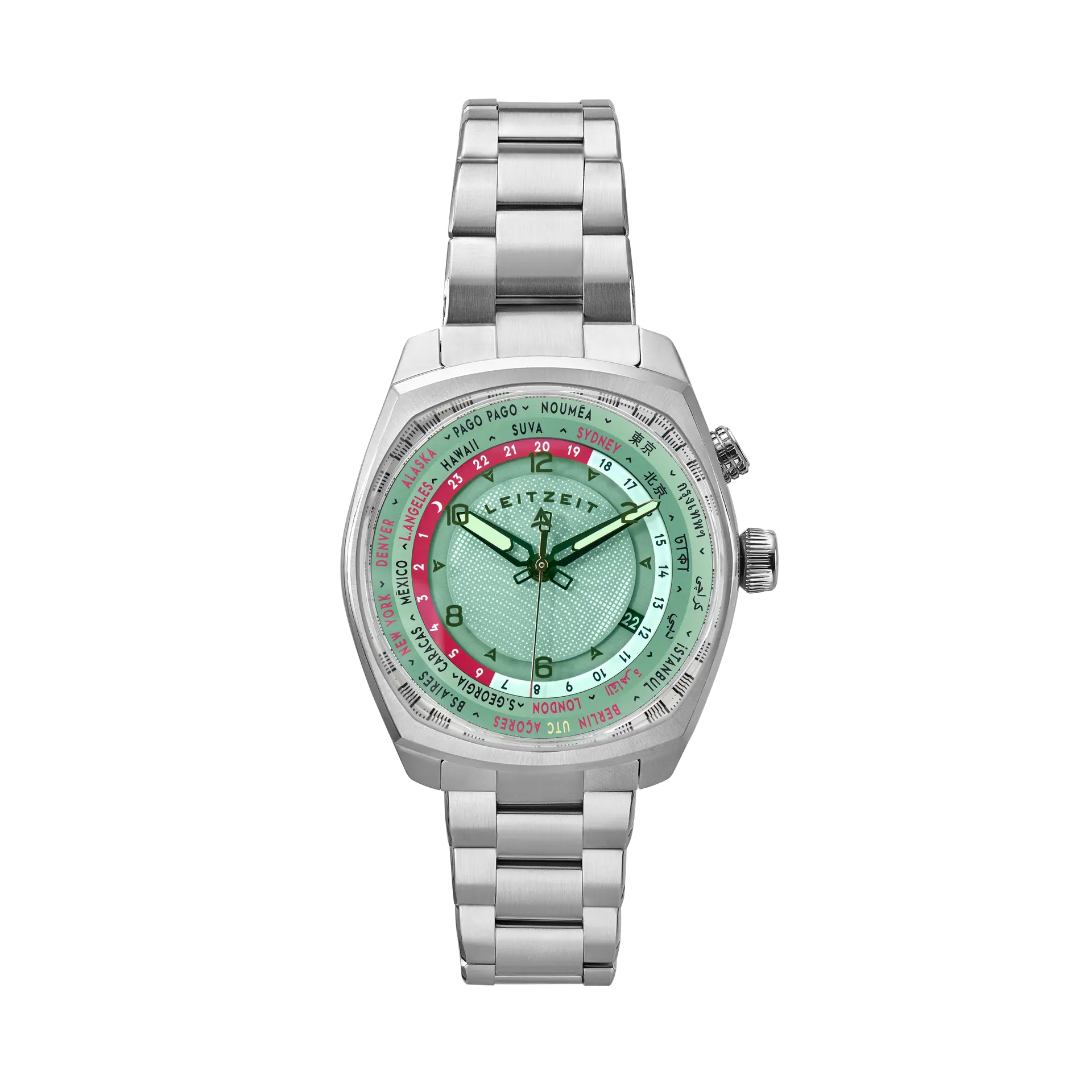
Is a World Timer Watch Worth Considering for Frequent Travellers?
If you frequently communicate with individuals from other countries or want to see several time zones without having to change your clock each time, a world timer watch may be a good choice for you. Its most useful feature is the ability to see the world's time on a single dial.
This can help international business travelers with their day-to-day planning. You can find out if your coworkers have started their work day, compare meeting times or do not call someone when they're sleeping.
World timers also have the ability to appeal to watch fans that enjoy mechanical complications. The city ring, 24-hour scale and coordinated display are a helpful mix of engineering and design.
The additional features, however, aren't for everyone. If you don't need to know the time in multiple time zones, a GMT watch might be a more straightforward option.
Before you select one, think about how often you'd use the world timer feature. A watch is more valuable if its functions complement your lifestyle.
If you only travel occasionally, it may be a matter of taste. Those who travel internationally, often work remotely, or organize events across continents may find a world timer useful for daily use.
How Does Leitzeit Axis Mundi Fit into the World Timer Watch Category?
Axis Mundi is a mechanical world timer watch for those who enjoy mechanical timepieces and like to know the time in other parts of the world.
The Axis Mundi name brings to mind the idea of a central point connecting different places. That idea is perfect for a world timer, which combines several time zones into one dial.
The watch has a Miyota 9075 automatic movement, which is compatible with the mechanical timekeeping. The world timer feature ensures it is useful for travelers and global-minded individuals seeking to keep track of various time zones.
The Axis Mundi is also water resistant to 100 meters, has a domed scratch-resistant sapphire crystal, and has a 316L stainless steel case. These specifications provide valuable information for those looking to buy a time-zone watch and also for those who want to take into account the watch's day-to-day build.
World timer is a category of watch, an example of which is Axis Mundi, for someone comparing a GMT watch with a world timer. A world timer is not just a timer for one extra time zone but a more comprehensive display of the world's time.
It will still be a matter of choice. Someone who primarily tracks home time might want a GMT, and someone who frequently has to coordinate with multiple cities might want a world timer.
Those who are interested in mechanical travel watches can examine Axis Mundi's design and specifications to see how this category of watchmaking marries the time zone with more traditional watchmaking.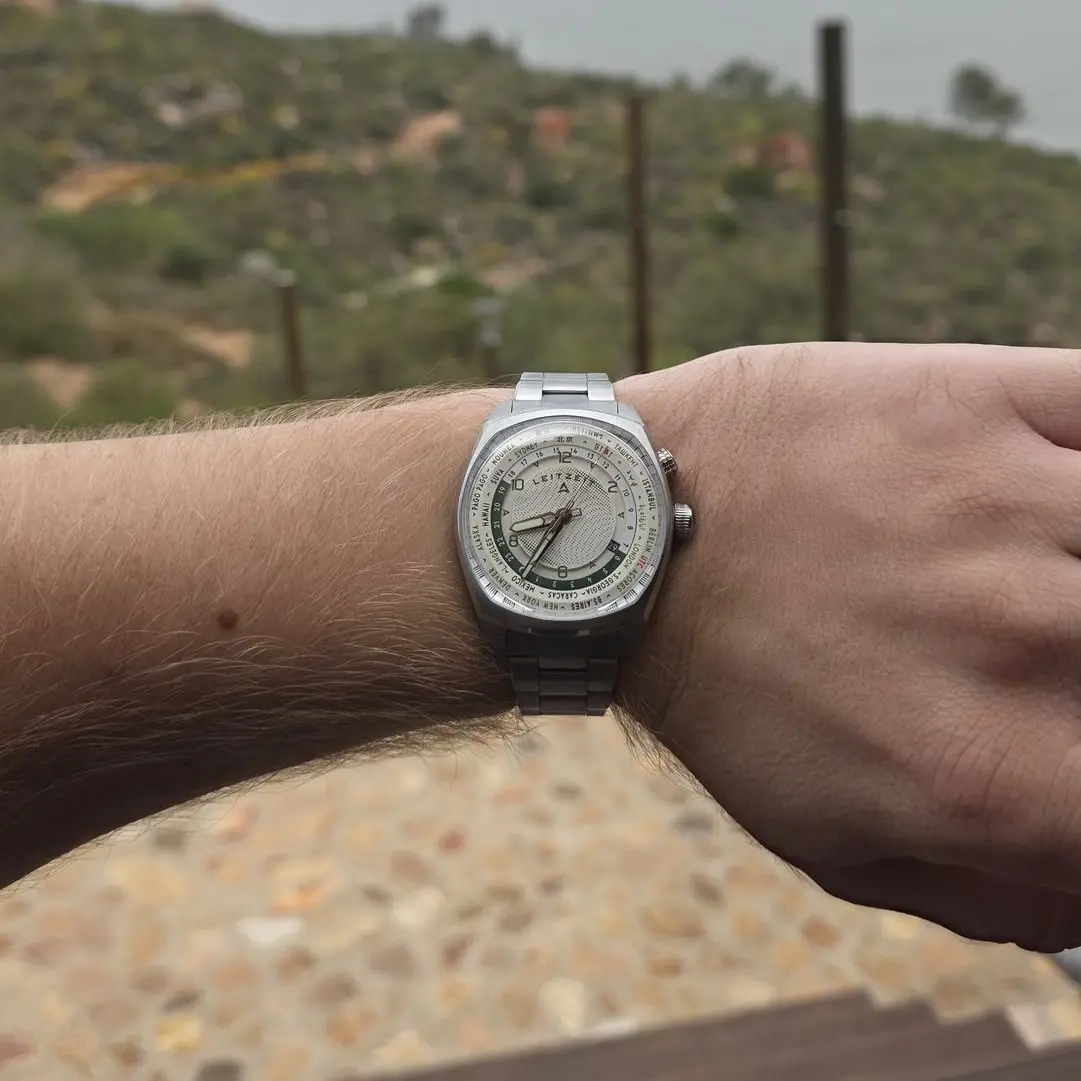
GMT or World Timer: Which Watch Should You Choose for Your Next Trip?
The best Traveller Watches are dependent on the way you travel and the number of time zones you need to follow. A GMT watch may be a sensible option if you are primarily looking for a watch that will show your local time and home time. If you frequently need to check the time in multiple cities across the globe, a world timer watch might be more suitable.
You'll want to think about your lifestyle, ease of readability, and the time-setting mechanism before you make your purchase. Comfort, durability, and design are also factors to consider to ensure that the watch will function beyond your travels.
To learn more about the world timer category, check out Axis Mundi and its features. Check how it is designed and how it works, and determine if it's the right fit for your travel requirements. The Traveller Watch will help you manage multiple time zones with ease and have more confidence in your travels no matter where you go.
Frequently Asked Questions About Traveller Watches
1. What Is the Difference Between a GMT Watch and a World Timer?
A GMT watch usually shows two time zones, with a second 24-hour hand for the other time zone displayed. A world timer is a timepiece that shows several different time zones around the world, typically with a ring of cities and a 24-hour clock.
2. Are GMT Watches Better Than World Timers for Travelling?
GMT watches are often ideal for those who primarily need to track local and home time. World timers are for those who often need to see multiple cities or set up international timings. There is no single answer that is always better.
3. Can a GMT Watch Show Three Time Zones?
Yes, there are GMT watches that can display three time zones. The primary hands show the local time, the GMT (Greenwich Mean Time) hand shows the time in another time zone, and a rotating bezel can be used to read a third time zone if the watch has a design that allows it.
4. Do World Timer Watches Show All 24 Time Zones?
World Timer watches a show of 24 world time zones with a city ring and a 24-hour time scale. The exact way that these unusual time offsets are displayed and handled, however, depends on the model. Some places also have daylight saving time (DST) enabled, which may affect the relationship between the two time zones.
5. Is the Leitzeit Axis Mundi a GMT watch or a world timer?
Leitzeit Axis Mundi is a world timer watch that features a Miyota 9075 automatic movement. It features a world timer design, making it relevant to those who want to learn about the world timer watches.