Anti-magnetic watches are designed to resist magnetic interference, ensuring that the watch's timekeeping mechanism remains accurate and reliable. They are constructed with special materials, protective shielding and sophisticated movement engineering to minimize the impact of magnetic fields on delicate parts like the hairspring.
But how does magnetism work on a mechanical watch anyway? Some common household items like smartphones, headphones, laptop speakers, and wireless chargers can create a magnetic field that can affect your watch. This exposure can interfere with its motion and make it gain or lose time.
When you understand the science behind anti-magnetic technology, then you will understand why magnetic resistance is important. Now let's delve into the workings of this technology, the materials used to safeguard watch movements, and how it enhances the mechanical watch's reliability.
What Are Anti-Magnetic Watches?
Anti-magnetic watches are watches that are designed to withstand magnetic fields that can affect the internal movement of the watch. They are built with special materials, special structures or a combination of both to minimize the impact of magnetism and ensure more accurate timekeeping.
A mechanical watch has many small metal parts that are all involved in measuring time. Some of these components, especially the hairspring, can react to magnetic fields. If they are affected by magnetism, the watch may gain or lose time.
These sensitive parts are protected by anti-magnetic technology. Manufacturers may use silicon components or a soft iron inner case that reroutes magnetic fields away from the movement.
But anti-magnetic does not imply completely immune to magnetism. Each watch has a particular resistance level and powerful magnetic fields can still influence some watches.
- For example: If you regularly place your watch beside a laptop speaker or a magnetic phone case, a regular mechanical movement may experience magnetic interference. A well-designed anti-magnetic watch can provide greater protection against this common exposure.
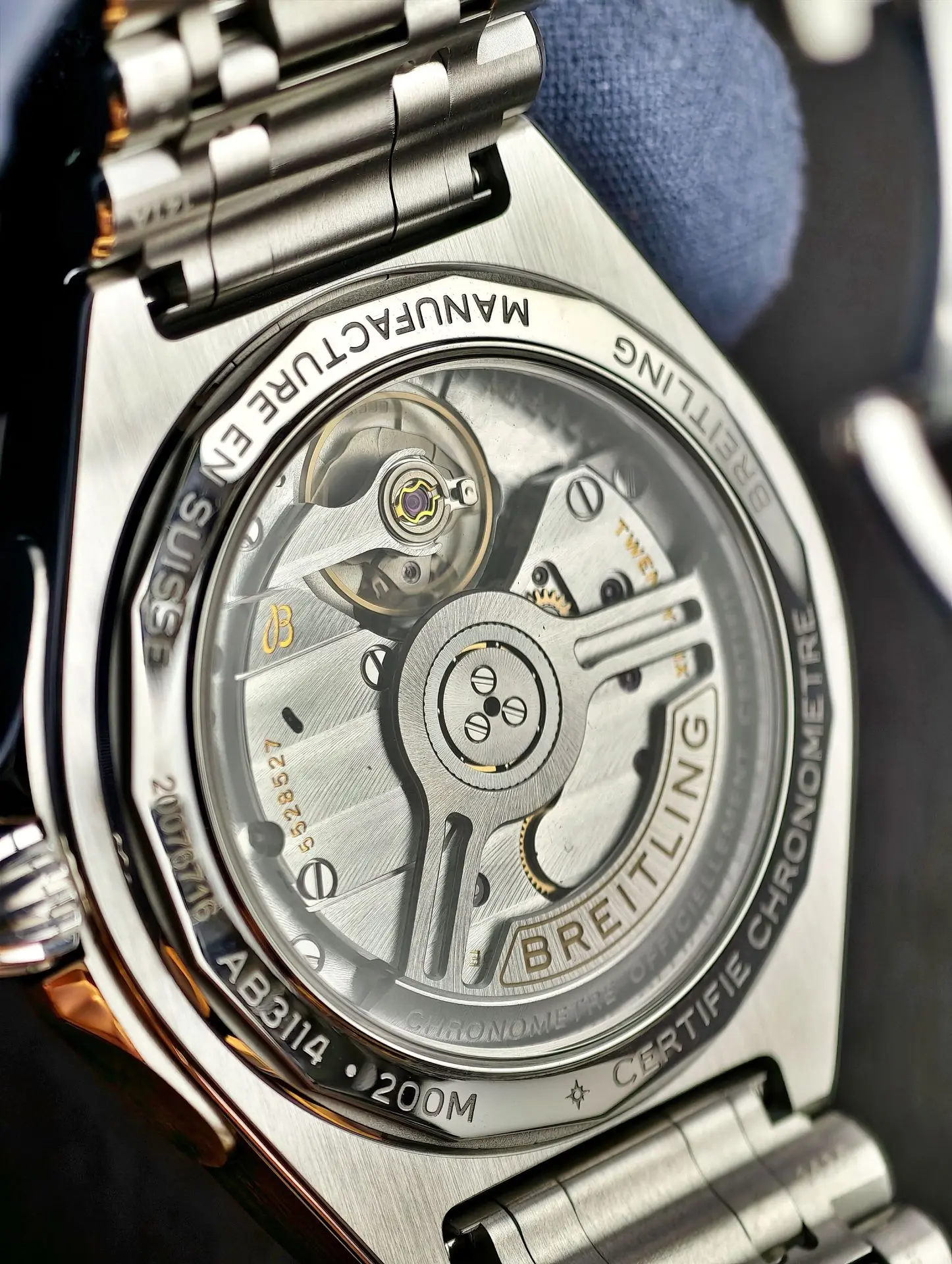
How Does Magnetism Affect Mechanical Watches?
Magnetic fields can disrupt a mechanical watch's hairspring and other delicate parts. This interference can affect the speed at which the movement operates, which may make the watch run fast or slow.
To appreciate why this is the case, one must first know how a mechanical watch tells time.
The Role of the Hairspring in Timekeeping
One of the key elements within a mechanical watch is the hairspring. It is used in conjunction with the balance wheel to regulate the regular oscillations of the movement, which are used by the watch to measure time accurately.
Imagine the hairspring is a small spring that is constantly expanding and contracting. These movements help regulate the watch's timekeeping.
The regulating system of a mechanical movement is the balance wheel and hairspring. They regularly move and help the watch to measure time in regular intervals.
But there are very fine coils of metal in the hairspring. These coils can be magnetized by a strong magnetic field and thus can attract or stick together.
If this occurs, the hairspring may not move as freely as it should. This alters the oscillation of the balance wheel and thus the accuracy of the timekeeping.

How Magnetic Fields Disrupt Watch Accuracy
Magnetic interference may alter the effective length of the hairspring and interfere with the regular motion of the balance wheel. Your watch may therefore run faster or slower than the normal rate.
A magnetized hairspring can cause its coils to stick together. This reduces the working length of the spring and can cause the balance wheel to vibrate faster.
Other times, magnetic interference can cause erratic motion and cause the watch to perform erratically.
You might notice:
- Time Gain: Your watch runs faster than usual.
- Time Loss: Your watch falls behind the correct time.
- Irregular Performance: Your watch is not keeping time.
- Stoppage of Movement: In some cases, there may be interference strong enough to prevent the watch from moving.
For instance, if your mechanical watch normally gains a few seconds a day. It gains several minutes after some time near a strong magnetic source. This is an unexpected change that may be explained by magnetization.
Common Sources of Magnetic Fields in Everyday Life
Magnetic fields are not just found in scientific labs. Magnets or magnetic fields are found in many common household and electronic items.
Common sources include:
- Smartphones: Speakers and magnetic phone accessories can cause your watch to be exposed to magnetic fields.
- Laptop Speakers: Small magnets in speakers can interfere with sensitive watch parts.
- Headphones: Certain headphones have powerful magnets in their speaker drivers.
- Wireless Chargers: Charging equipment can create electromagnetic fields around the charging area.
- Refrigerator Magnets: Decorative magnets will cause a watch to be affected if they are placed right next to it.
- Magnetic Handbag Clasps: These tiny clasps can help magnets get close to your wristwatch.
- Audio Speakers: Magnets sometimes can be found in larger speakers, which can produce stronger magnetic fields in the vicinity.
It's not a rule to stay away from all electronic devices. Rather, avoid strong magnetic fields, particularly when taking off your watch.
How Does Anti-Magnetic Watch Technology Work?
Anti-magnetic watch technology safeguards the sensitive movement parts with special materials and construction. Manufacturers mainly use two approaches: magnetic shielding and nonmagnetic movement components.
Both techniques allow the mitigation of the impact of external magnetic fields, but in different ways.
Using Soft Iron Inner Cases for Magnetic Protection
A soft iron inner case prevents a watch movement from being affected by a magnetic field by bending magnetic field lines around the sensitive parts. This design creates a protective enclosure, which helps to reduce the magnetic field within the watch.
This design is often referred to as a Faraday cage, but the soft iron magnetic shield does not function exactly as an electrical Faraday cage.
Soft iron is a material with high magnetic permeability. In other words, the magnetic lines of force can penetrate it more readily than the air within the protected area.
The soft iron structure offers an alternate path around the magnetic field, rather than letting it go straight through the movement.
A standard protective structure can consist of:
- A soft iron inner case.
- A soft iron dial.
- A soft iron movement cover.
These components work together to protect the movement from outside magnetic fields.
- Practical example: inner cases made of soft iron are used to protect the movement in the case of some professional mechanical watches which are exposed to stronger magnetic fields. This way, manufacturers can enhance magnetic resistance without having to replace all of the movement's components.
Silicon Hairsprings and Non-Magnetic Materials
Another method of enhancing magnetic resistance is to use silicon hairsprings. However, silicon does not magnetize in the same way as the traditional ferromagnetic metal components.
Silicon is desirable to manufacturers because it has a number of properties that are useful:
- Does not suffer from magnetic interference.
- It weighs less than many traditional metals.
- Has a uniform physical characteristic.
- It can aid in the regulation of precise movement.
Other non-magnetic materials are used by some watchmakers in the production of movement pieces, such as some alloys and special metals.
But a silicon hairspring is not the only component required to make an entire watch anti-magnetic. Magnetic fields can still affect other parts of the movement.
- For instance, a watch with a silicon hairspring might be more magnetic-interference resistant than a watch with a steel hairspring. But the manufacturer should take the whole movement into account when deciding on its magnetic resistance.
Advanced Movement Design and Magnetic Resistance
Modern watchmaking is not just a matter of replacing individual components. Manufacturers also take into account the interaction between various materials and the movement parts in relation to magnetic fields.
They can choose non-magnetic materials for sensitive parts, redesign sensitive parts, and integrate these with protective shielding.
This is useful for manufacturers to create movements that will continue to function in a magnetic field that might otherwise interfere with their normal function.
The key is to consider the entire movement, not just one component.
How Do Anti-Magnetic Watches Improve Reliability and Accuracy?
Anti-magnetic watches are more reliable because they are less likely to be affected by magnetic fields, which can interfere with the sensitive components of the watch's movement. This makes it easier for the watch to keep time in normal use.
There are a number of practical advantages to magnetic resistance, especially for those who wear a mechanical watch frequently.
More Consistent Timekeeping
A mechanical watch requires the balance wheel to oscillate regularly to measure time. These oscillations may be disturbed by magnetic interference and result in unexpected accuracy changes.
The anti-magnetic technology helps to safeguard the regulating system and maintain its more stable operation.
For instance, a magnetically resistant watch may provide extra protection from magnetic sources if you use a laptop for several hours a day.
- Please note that magnetic resistance does not mean absolute accuracy. Timekeeping is also affected by factors like movement quality, temperature, lubrication and mechanical wear.
Better Performance Around Everyday Electronics
In the modern lifestyle, people are continually interacting with electronic devices. You may have your phone in your pocket, wear headphones during work, or use a wireless charging station at home.
These devices can be sources of magnetic fields, especially when they are held close together, and can affect your watch.
A magnetically resistant watch will provide greater protection from this exposure. You can now use your mechanical watch without having to be so concerned about normal magnetic interference.
But always take care of the manufacturer's instructions since different types of watches have different resistance.
Reduced Risk of Magnetization
An anti-magnetic movement is designed to minimize the chance that external magnetic fields will impact its sensitive components.
This is important because a conventional mechanical watch can be magnetized even after it is removed from the source of the magnetic field.
This risk is mitigated with anti-magnetic materials and shielding, which will save you from unexpected accuracy issues and unnecessary servicing.
Long-Term Mechanical Reliability
A mechanical watch is an investment in engineering, craftsmanship, and longevity. By safeguarding its delicate parts, it ensures reliable operation.
Magnetic resistance provides an additional barrier to protection beyond routine maintenance and proper handling.
However, it does not eliminate the need for regular servicing. Even mechanical movements have parts that are subject to friction and need lubrication after a while.
The most effective solution is a combination of careful movement design, appropriate magnetic protection, and proper maintenance.

What Is the ISO 764 Standard for Anti-Magnetic Watches?
ISO 764:2020 is an international standard that sets the minimum requirements and testing procedures for magnetic-resistant watches. It is used to help manufacturers to prove how their watches will work in certain magnetic-field conditions.
The standard provides a more transparent means for buyers and watchmakers to interpret magnetic resistance beyond the marketing description.
Standard Magnetic Resistance
According to ISO 764:2020, a magnetic-resistant watch is a watch that is capable of resisting a constant magnetic field of 4,800 A/m.
A/m is the unit for current density, which is amperes per meter. This is used to measure the strength of a magnetic field.
A mechanical watch requires that it be running during testing. The standard also defines limits for the changes in timekeeping accuracy following exposure.
This provides manufacturers with a quantifiable performance goal.
Enhanced Magnetic Resistance
There are also watches that are magnetically resistant, which are described in ISO 764:2020.
These watches shall be able to resist the magnetic field of at least 16,000 A/m according to the relevant testing requirements.
This increased resistance rating provides greater protection in situations where greater magnetic fields may exist.
For comparison:
Magnetic Resistance Category | Magnetic Field Strength |
Standard Magnetic-Resistant Watch | 4,800 A/m |
Enhanced Magnetic-Resistant Watch | 16,000 A/m or higher |
These numbers refer to the strength of the magnetic field and do not necessarily indicate how well a device will resist all magnetic devices.
Why Does This Standard Matter?
When buying a watch, ISO 764 is a standard that can be used as a reference. It also prompts manufacturers to test their products under standard conditions.
When choosing a watch, check whether the manufacturer provides a verified magnetic-resistance rating. Don't presume that all watches with a silicon hairspring or protective inner case are ISO 764 compliant.
When it comes to a specific test result, you have more evidence than you do with a general marketing statement.
Anti-Magnetic Watches vs. Regular Mechanical Watches: What's the Difference?
Anti-magnetic watches and mechanical watches are similar, except that anti-magnetic watches are able to withstand external magnetic fields. Anti-magnetic models are made with special materials or protective structures to minimize interference with their movements.
Let's make a comparison here:
Feature | Regular Mechanical Watches | Anti-Magnetic Watches |
Magnetic Protection | Requires movement with building blocks. | Incorporates extra magnetic security |
Movement Materials | May include magnetically sensitive parts | May use non-magnetic materials, such as plastic, glass, or wood. |
Magnetic Interference | Increased risk in vulnerable designs | Lower risk within the limits tested. |
Timekeeping Stability | Magnetism may have an impact on accuracy. | Better protection against magnetic disturbances |
Everyday Use | Caution with strong magnets. | Provides extra protection around magnetic sources |
There is no guarantee that either category will provide greater overall accuracy.
A traditional mechanical watch can be a good timekeeper if it is properly regulated. Likewise, an anti-magnetic watch may still suffer from accuracy fluctuations due to temperature, wear, or poor regulation.
Magnetic resistance just tackles one specific issue: how magnetic fields will impact watch movements.
- Expert tip: When comparing two mechanical watches, take all the movement quality, accuracy specifications, serviceability, and magnetic-resistance rating into account. Don't rely on just one technical aspect when deciding which watch to buy.
How Can You Tell If Your Mechanical Watch Is Magnetized?
Magnetization can be detected by a sudden and unusual change in timekeeping. After exposure to a strong magnetic field, your watch may start to gain time, lose time or display erratic performance.
However, magnetism is not the only possible cause of these problems.
Here are some indicators to look for.
Your Watch Suddenly Starts Running Fast
A magnetized hairspring can develop coils that stick together. This alters the length of the spring and may raise the frequency of oscillations of the balance wheel.
Your watch could therefore gain time more than usual.
- For instance, a watch that normally loses 5 seconds a day may suddenly start to gain several minutes a day, and magnetism is one of the possibilities.
Your Watch Loses Time Unexpectedly
Magnetic interference can also disrupt the regular operation of a movement and cause the movement to lose time.
If you have noticed a sudden change in accuracy, consider if you have recently placed your watch near speakers, magnetic accessories or other strong magnetic sources.
Your Watch Stops or Becomes Inconsistent
Mechanical watches may sometimes stop working because of strong magnetic interference.
But a stopped watch may also be a sign of low power reserve, mechanical damage or another issue with the movement.
Not all sudden changes are due to the magnetization.
How to Check and Fix a Magnetized Watch
A watchmaker can take out the residual magnetism from a mechanical movement by using a special tool known as a demagnetizer.
This is typically accomplished by placing the watch inside a controlled alternating magnetic field and slowly decreasing its intensity.
It is not a good idea to try to solve the problem by putting your watch close to another magnet. This can exacerbate the situation.
If your watch gains or loses a lot of time, do the following:
- Keep the watch away from strong magnetic sources.
- Test to see if the accuracy issue persists.
- Take the watch to a qualified watchmaker or watch service center.
- Have the technician test for magnetization.
- If the watch requires demagnetization or additional servicing, follow the technician's instructions.

Do You Really Need an Anti-Magnetic Watch?
If you work or spend time near magnetic equipment, you might want to get an anti-magnetic watch. But this depends on what you do and how you plan to use the watch.
Consider these situations:
- Individuals working with electronics: If your occupation requires you to use speakers, electronic equipment, or magnetic tools, extra magnetic resistance will help keep your mechanical watch safe.
- Frequent travelers: You can use several electronic devices in transit, such as phones, laptops, headphones and wireless accessories. The magnetic resistance provides an additional level of security.
- For watch collectors who enjoy mechanical watches, magnetic resistance can be a helpful attribute to consider when comparing watch movement designs.
- For the everyday watch aficionado: If you're not working around powerful magnetic fields, you might want the extra security that anti-magnetic engineering offers.
But if you're not planning on using it for special occasions, you don't always have to buy a magnetic-resistant watch.
Select a resistance level that corresponds to your environment and not one that you will hardly use for an additional cost.
How to Protect Your Mechanical Watch From Magnetism
To prevent damage to your mechanical watch, keep it away from strong magnetic sources and follow the manufacturer's instructions for care. Even watches that are magnetically resistant can benefit from good sense.
Some helpful habits include:
- Maintain a reasonable distance: Do not put the watch directly against the speaker of the phone or put magnetic accessories against the watch.
- Take care in storing your watch: Avoid placing it next to strong magnets, magnetic clasps, or large speakers.
- Proper use of wireless chargers: Do not leave a mechanical watch on or near a wireless charging pad.
- Review magnetic accessories: Magnetic phone cases, bags, and bracelets can put your watch at risk in the presence of magnetic fields.
- Follow the manufacturer's recommendations: Each watch has its own magnetic-resistance requirements.
- Get professional servicing: If your watch suddenly starts to behave in strange ways, have it checked by a watchmaker.
You don't have to give up electronic devices or drastically alter your lifestyle. By using a bit of knowledge and good sense, unnecessary magnetic exposure can be minimized.
Final Thoughts on Anti-Magnetic Watches
Anti-magnetic watches are an example of how ingenious engineering can address a practical issue in mechanical watchmaking. Magnetic fields may interfere with sensitive parts of the movement, especially the hairspring, and thus influence the accuracy of the watch. Manufacturers can minimize this interference by employing protective shielding and non-magnetic materials, which helps enhance reliability in everyday use.
At Leitzeit we truly value purposeful engineering, mechanical craftsmanship and automatic watches for long-term use. We appreciate transparency, functionality and all those details that make a timepiece desirable to wear. Our Axis Mundi is a testament to our dedication to meaningful watchmaking, with its world-time functionality and thoughtful design.
If you love mechanical watches, check out our Axis Mundi and see what drives us to make meaningful timepieces.
Frequently Asked Questions
1. How do anti-magnetic watches work?
Anti-magnetic watches are constructed with special materials and protective structures to minimize the influence of the magnetic field on the watch's movement. To protect sensitive parts and ensure reliable timekeeping, manufacturers may employ silicon hairsprings, non-magnetic components or soft iron inner cases.
2. Can a magnetic field permanently damage a mechanical watch?
A mechanical watch can generally be exposed to most types of everyday magnetic fields without permanent damage. But sensitive components can be magnetized by strong magnetic fields and this can lead to accuracy issues. Residual magnetism can normally be removed with a demagnetizer by a qualified watchmaker, but if there is also mechanical damage, other repairs may be necessary.
3. Are automatic watches more sensitive to magnetism than quartz watches?
This depends on the design of the watch. Magnetized hairsprings can cause mechanical and automatic movements to malfunction, and magnetic interference can occur with analog quartz watches and their magnetic stepper motors. Digital quartz watches tend to be more resistant to common magnetic disturbances since they don't utilize the same hand-driving motor mechanism.
4. How much magnetic resistance does a good mechanical watch need?
The magnetic field strength for standard magnetic resistance is 4,800 A/m as per ISO 764:2020. The enhanced magnetic resistance begins at 16,000 A/m, according to the standard's pertinent requirements. The optimum level will vary according to your normal exposure to magnetic equipment and your surroundings.
5. Can a watch become accurate again after being magnetized?
Yes. Usually, a watchmaker will be able to demagnetize the watch to restore its normal timekeeping. If the watch still gains or loses time following demagnetization, however, the technician should check the movement for other mechanical issues that could also be affecting the watch's accuracy.