You know that wearing an automatic watch feels different than wearing a normal quartz watch. It is a part of your wrist movement, it is alive, and it tends to become part of your personality. However, here is what most people overlook: your watch should also be serviced by a watch service to ensure that it runs smoothly.
We frequently encounter watch owners at Leitzeit and they claim that their watch is still working well and therefore they do not see the need to service it. This scenario is where long-term problems often begin. The automatic watch may last years without any problems, but inside, the movement wears out over time.
Here you will find out how frequently you should service your automatic watch, what the red flags are that you should never overlook and how easy maintenance habits can make your watch last twice as long.
And should you desire professional assistance you can always contact us at Leitzeit to provide you with professional watch service and maintenance advice that will keep your timepiece in good condition.
What Is an Automatic Watch?
A mechanical watch that does not need a battery is referred to as an automatic watch. Rather, it works with your natural movement of the wrist as its power source. Whenever you stretch your arm in your day-to-day activity, the watch silently records the movement and transforms it into energy.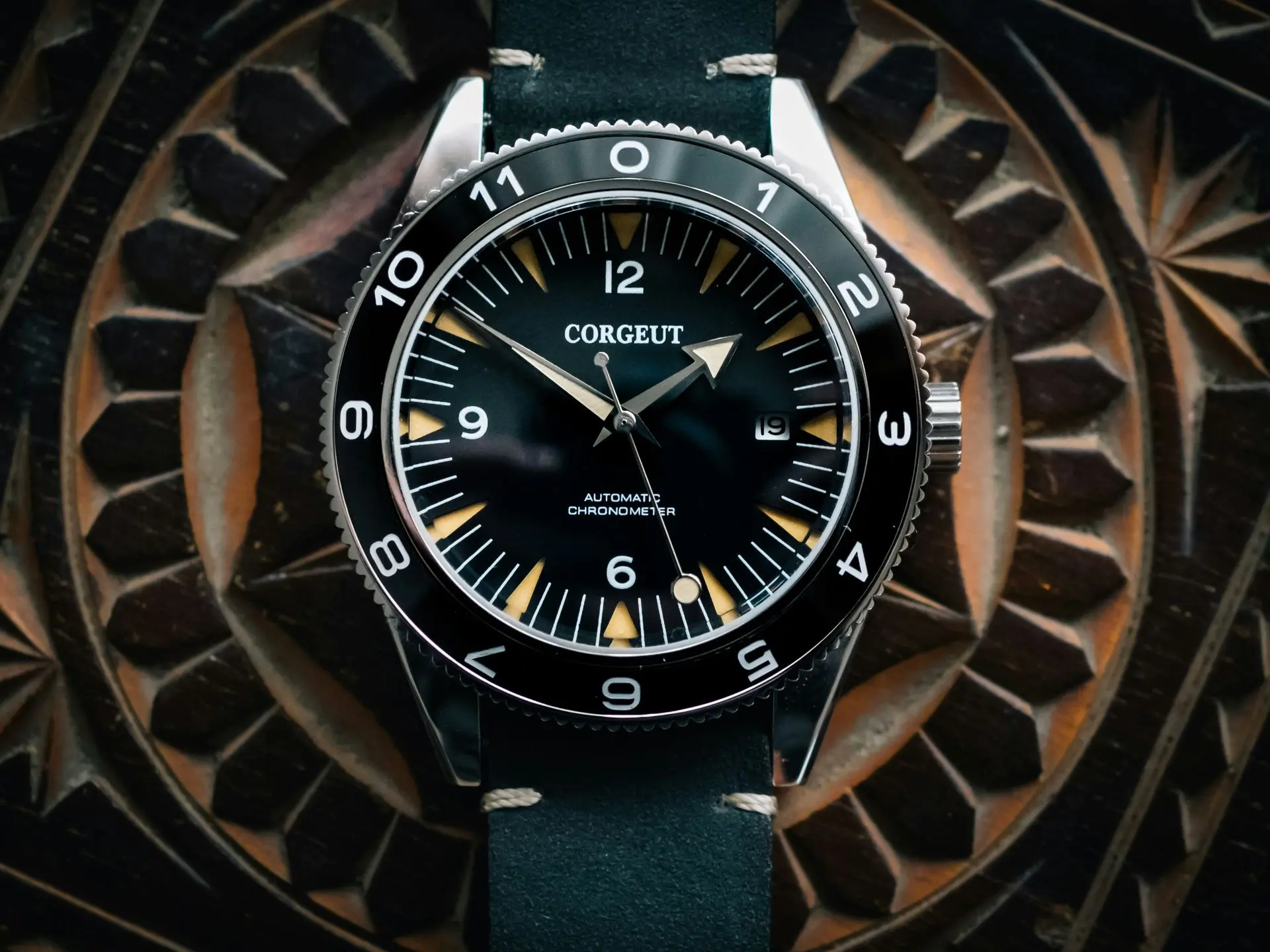
How Automatic Watches Work
A watch is an automatic one that does not need a battery. Rather, it uses your natural movement of the wrist as its energy source.
The easy procedure is as follows:
- Daily activity is in the form of movement of the wrist.
- The rotor is a small internal component that spins.
- The mainspring is a spring wound on the rotor.
- The energy is stored in the mainspring.
- The movement of the watch is gradually driven by that energy.
- This continuous motion keeps the watch running without a battery.
This is the reason why it is referred to as a self-winding watch. However, even though it is automatic, it still requires careful attention and monitoring to maintain accuracy.
Why Maintenance Is Important
Consider an automatic watch as a high-performance engine. It runs smoothly when everything inside it is working properly.
Inside your watch:
- Little gears spin a thousand times a day.
- Special lubricating oils minimize friction.
- The metal components are in continuous contact with one another.
Well, this is the issue: nothing within remains flawless forever.
After a few years:
- Oil dries out
- Dust gets into crevices.
- Friction increases
- Components gradually become eroded.
When you do not service your watch, it does not stop overnight. Rather, it gradually loses its accuracy and power and gets internal damage that is costly to repair in the future.
This is why the regular watch service safeguards performance and value.
How Often Should You Service an Automatic Watch? (Watch Service Interval)
Every watch does not have one rule but the professionals (such as our team at Leitzeit) use the standards that are tested in the industry.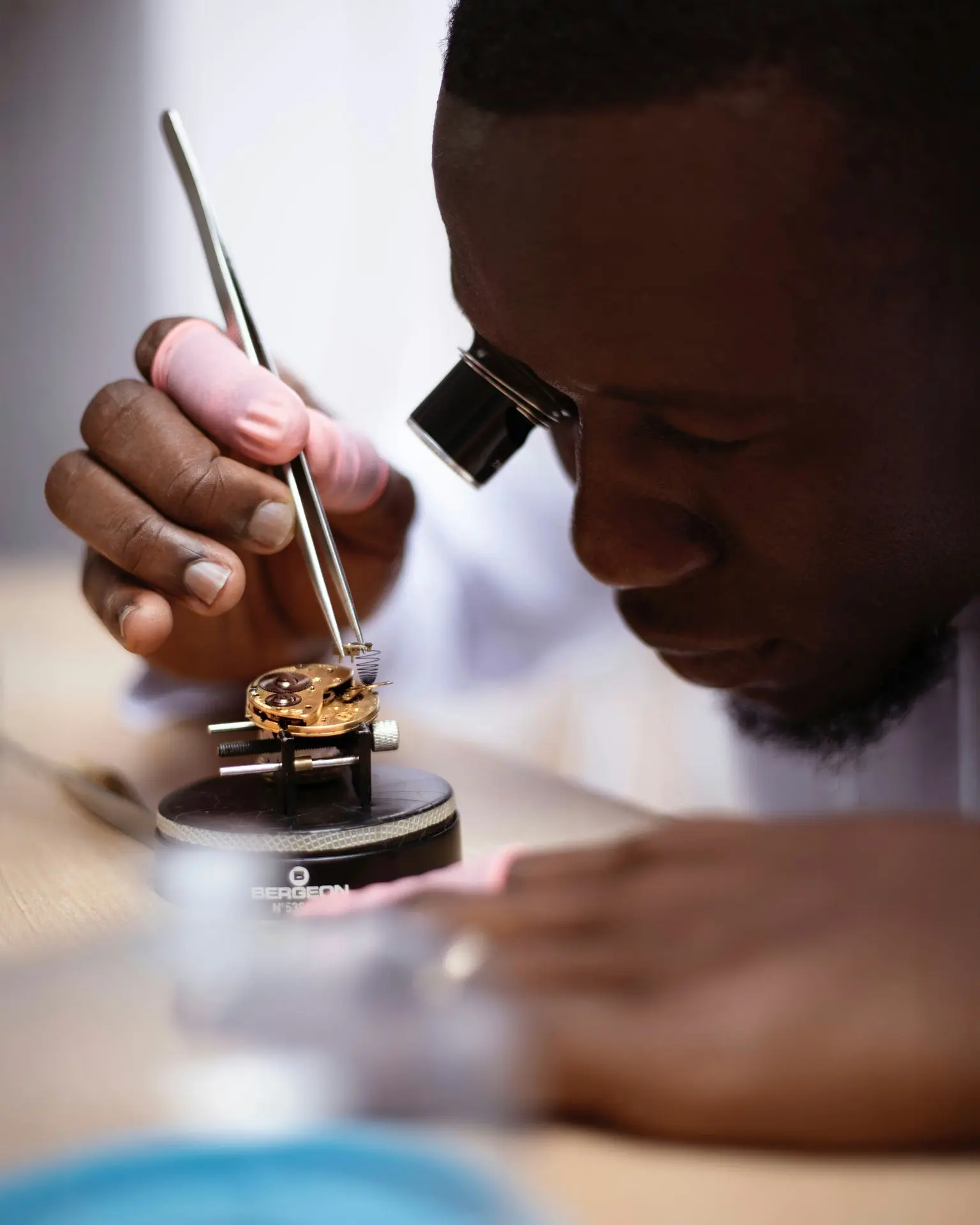
General Service Rule (3 to 5 Years)
The majority of automatic watches should be serviced every 3 to 5 years.
This guideline is based on the duration of time that internal lubricants and mechanical parts remain in good condition when used normally.
But this is not so much a rule—it is subject to real-life considerations including
- Watch construction quality: The better the movements, the longer you can use the watch without problems.
- Wearing frequency: The more you wear it, the faster the wear and tear on the inside of the movement.
- Your environment: Heat, humidity, and dust all impact internal parts.
- Storage habits: Ineffective storage can shorten the lubrication life despite the watch not being in use.
If you wear your watch daily, we highly recommend setting your goal to be closer to 3 years. The daily motion causes friction in the mechanism every day, and this gradually decreases accuracy with time.
Luxury Watches (5 to 7 Years)
High-end or luxury watches use advanced engineering, stronger alloys, and higher-quality lubricants. Because of these factors, they naturally resist wear better than standard models.
That means:
- They maintain accuracy for a longer time
- Their internal friction remains under control over years.
- Their movement parts are constructed in a durable manner.
Nevertheless, luxury watches are not maintenance-free, either.
Safe service interval:
- 5 to 7 years maximum
By exceeding this limit, you risk internal damage that is not obvious and includes:
- Lubrication of the main parts that are dry.
- Greater friction in gear systems.
- Slow deterioration of time accuracy.
- Lower value of the watch in the long term.
Even luxury watches must be serviced to prevent failures, not merely repaired.
Daily Wear vs Occasional Use
Your lifestyle plays a major role in deciding service timing.
Usage Type | Watch Condition | Recommended Service Interval |
Daily Wear | Constant movement and friction | 3–4 years |
Office Use | Moderate daily activity | 4–5 years |
Occasional Wear | Rare use, stored often | 5–6 years |
Although you may not be wearing your watch on a regular basis, it still requires servicing. Most individuals think that watches that are not used stay new, but this is not true.
Inside the watch:
- Lubricating oils can degrade and separate over time, even if the watch is not regularly worn.
- Seals become brittle with age.
- Lubricants may dry out, and seals can deteriorate as the watch ages.
Then whether you wear it every day or not, your watch is still subject to the natural aging process and needs to be serviced properly.
Environmental Effects
The time can be slowed or sped up by your surroundings more than actual time.
The following are the effects of various conditions on your watch:
- Hot climates: High temperatures dissolve lubricating oil more quickly.
- High humidity: Moisture slowly enters seals and damages internal parts
- Poor air quality (dusty): Small particles cause friction and wear gears more quickly.
- Salt air (coastal areas): Salt exposure predisposes corrosion within metal parts.
If you are in such conditions, we recommend reducing your service period by 6-12 months to ensure better protection and long-term performance.
Warning Signs Your Watch Needs Service
Your watch always gives you early warning signs of serious issues that emerge. The trick is to observe them when they are young and act early.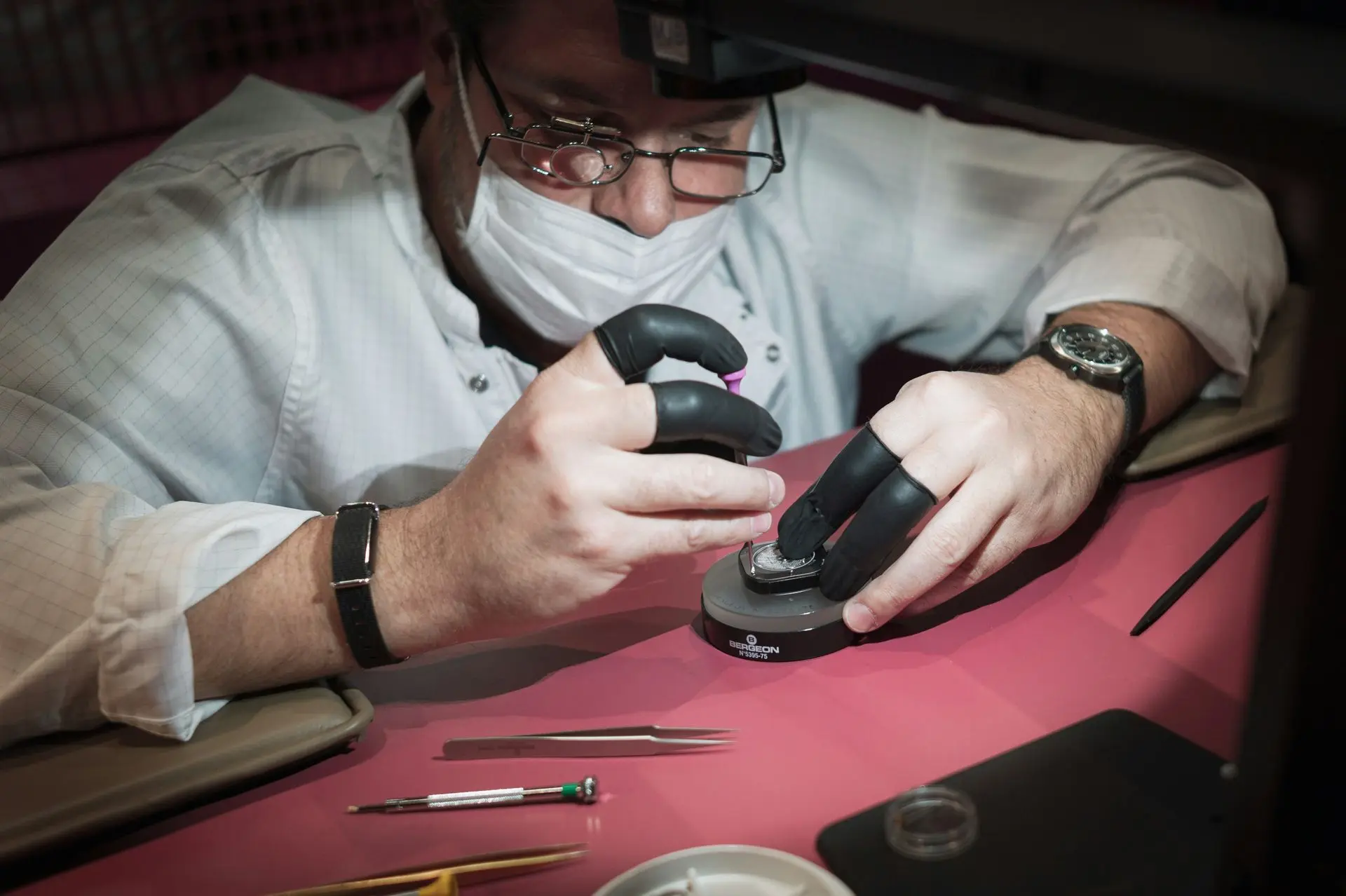
Time Accuracy Problems
When your watch begins to indicate:
- Gaining time every day
- Wasting some minutes in the long run.
- Unregulated or non-regular ticking.
Then your watch definitely needs servicing.
Even a minor mistake of 10-20 seconds per day does not seem to be a significant problem, yet it gradually accumulates into bigger timing problems. With time, it is a clear indication of internal wear or lubrication failure.
Power Reserve Drops
A healthy automatic watch usually runs:
- 36 to 48 hours after full winding
When your watch stops within a few hours after you take it off, something is not working well in it.
This usually occurs because of:
- Sticky or dry lubrication in gears.
- Weak or tired mainspring
- Greater friction between parts internally.
The healthy movement system is always exhibited in a strong power reserve. A weak one indicates that it needs to be serviced.
Moisture Inside the Glass
If you notice:
- Mist or fog in the dial.
- Crystals below the water droplets.
- Post-moving condensation between hot and cold.
Take off the watch.
The problem of moisture is one of the most hazardous, as it can
- Damage delicate gears
- Cause rust on metal parts
- Permanently ruin the dial design
Such a scenario continuously requires emergency professional watch care.
Strange Noises
An automatic watch that is in good condition works without making any noise.
If you hear:
- Grinding sounds
- Clicking noises
- Rattling about the case.
It typically implies that there is a looseness, misalignment, or weariness of internal parts.
These are the initial signs of mechanical harm and neglecting them may complicate the situation.
Crown or Winding Issues
You should always move the crown smoothly when you:
- Set the time
- Wind the watch
- Adjust the date
Problems include:
- Hard or stiff turning.
- Excessive looseness
- Resistance during adjustments
Never force the crown if you feel resistance. The use of force may harm sensitive internal gears and make the repair more expensive.
Jerky Secondhand Movement
A healthy automatic watch is one with a smooth, sweeping second hand.
If you see:
- Sudden jumps
- Stuttering movement
- Random pauses
It normally shows lubrication problems or misalignment of gears within the movement.
This is among the most obvious indications that your watch is in need of service.
What Happens During a Professional Watch Service?
Most individuals believe that watch service is merely cleaning the watch. As a matter of fact, it is a full-fledged mechanical restoration process.
At Leitzeit, we use a system of a step-by-step process of returning your watch to its optimum condition.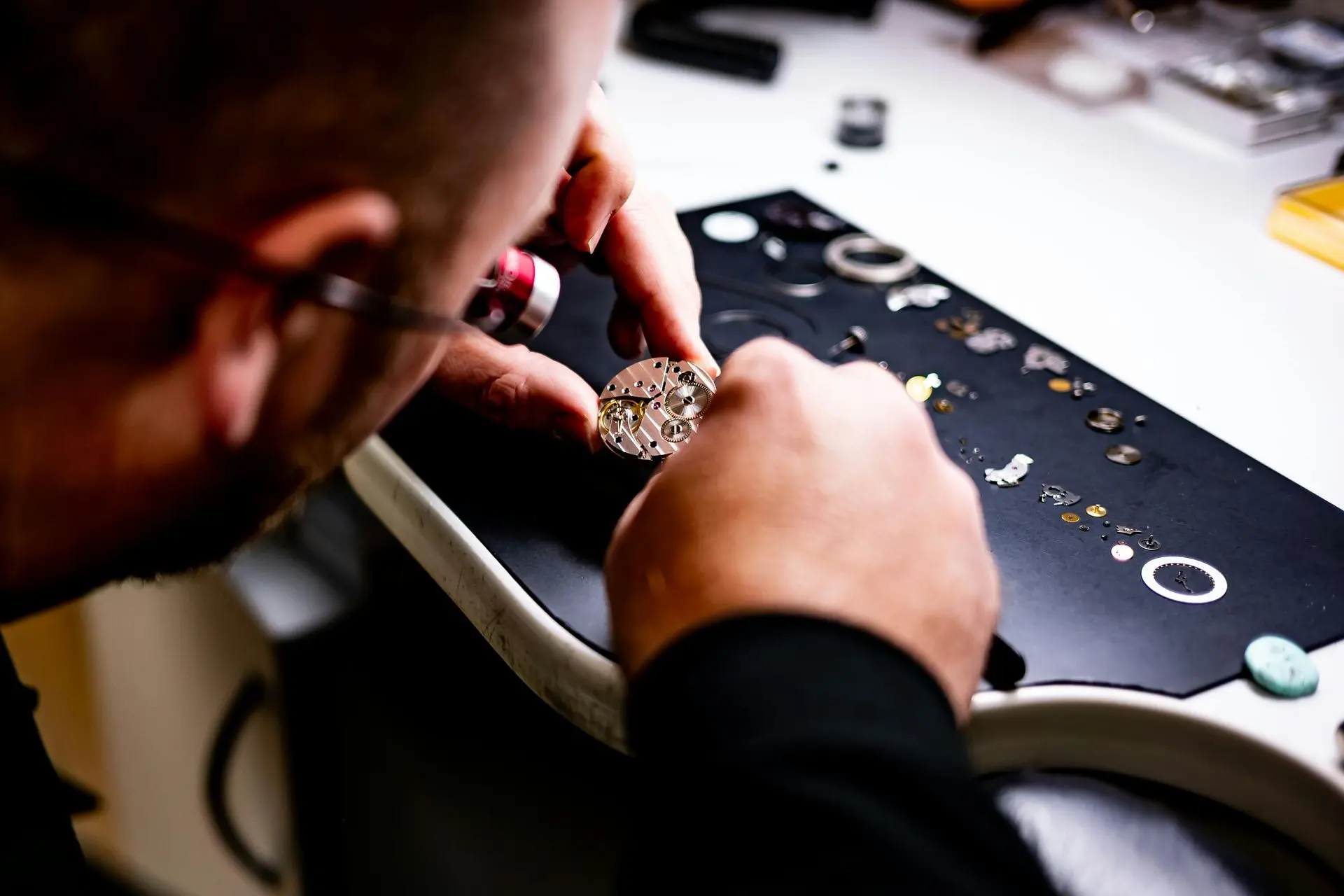
Full Disassembly
We take care to open the watch and disassemble all the internal parts.
This step is not hurried since each minute detail is significant in precision and performance.
Deep Cleaning
All parts are cleaned by professional means, including:
- Ultrasonic cleaning machines
- Specialized cleaning solutions
- Dust removal systems
This process eliminates the old oil, dirt and microscopic particles that influence movement performance.
Replacement of Worn Parts
We change damaged or worn parts, including:
- Gaskets (seals)
- Springs
- Worn gears
- Sealing rings
The parts are always of high quality or original based on the watch model in order to uphold performance and durability.
Lubrication
Our oils are used in minute, controlled doses of precision grade.
This is a very crucial step since
- Excessive oil is an attraction to dust and dirt.
- Excessive oil reduces friction and wear.
- Proper lubrication is needed to maintain smooth motion and precision.
Reassembly
We put the whole watch back together, bit by bit.
All the gears and parts have to fit. A little mistake can influence the time accuracy and general performance.
Testing & Calibration
We measure several areas of performance, which include the following:
- Accuracy of time over a few days.
- Power reserve performance
- Stability to motion in varying conditions.
- Long-term reliability
We do not approve the watch until it performs consistently.
Water Resistance Check
In case your watch has a water resistance ability, we will test it with pressure equipment to make sure that all seals are functioning well.
This will save your watch in case it gets spoiled by water.
Best Practices to Maintain Your Automatic Watch
There are easy things you can do to increase your watch life.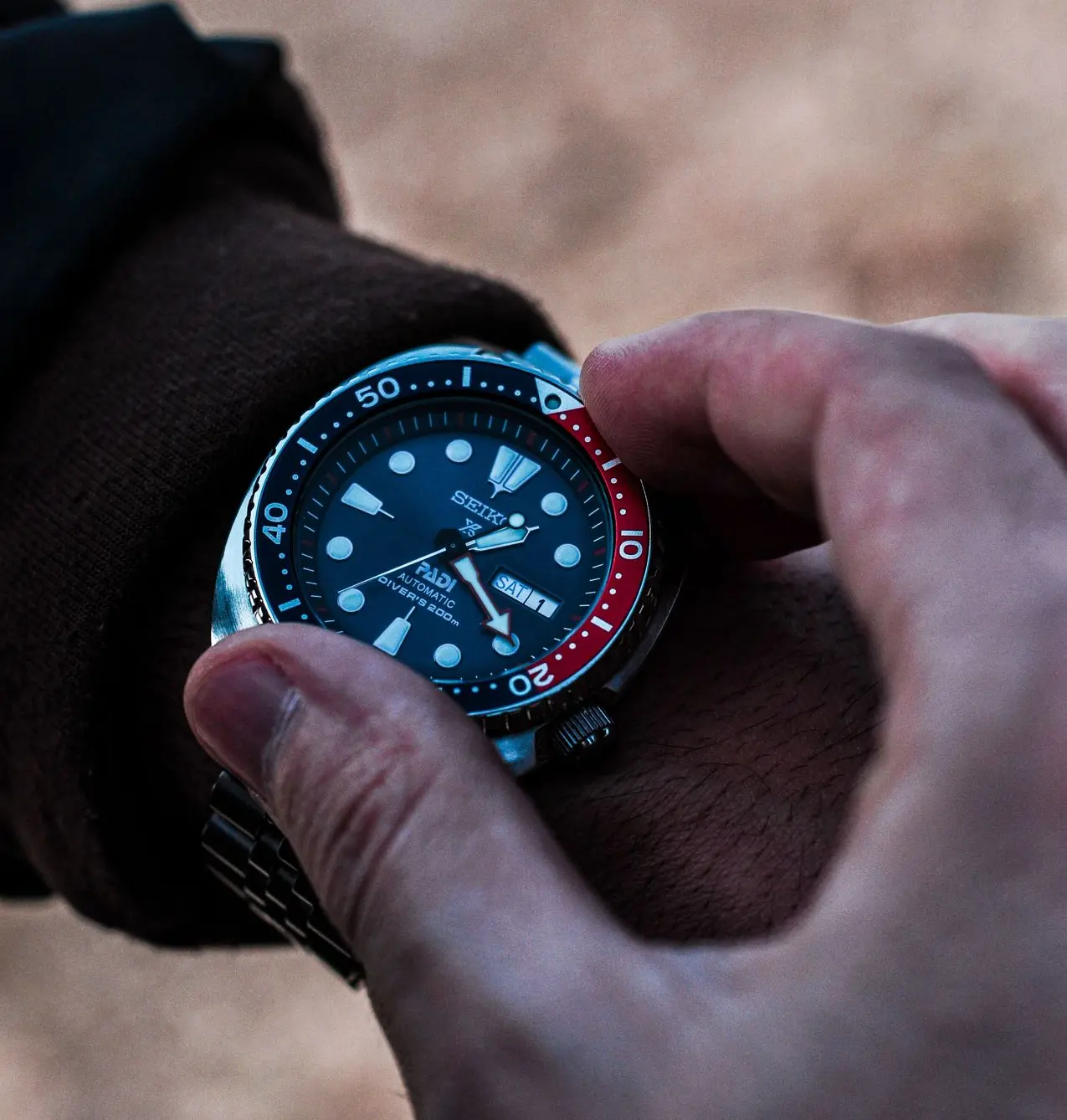
Wear It Regularly
An automatic watch works best when you wear it on the move.
If you don’t wear it:
- It stops working
- Internal oils settle
- With time movement becomes stiff.
We suggest that it should be worn a few times per week to maintain its activity.
Wear a watch winder
Assuming you have more than one automatic watch, a watch winder can assist in:
- Maintaining the movement.
- Ensuring a free flow of lubrication.
- Preventing long-term stoppage
Avoid Magnetic Fields
Magnetism may have a severe impact on time accuracy.
Do not put your watch near the following:
- Speakers
- Laptops
- Phones containing strong magnetic covers.
Keep It Away from Water
Even water-resistant watches have their limits.
Avoid:
- Hot showers
- Swimming (not rated)
- Exposure to steam in bathrooms or kitchens.
Handle It Gently
Do not:
- Drop your watch
- Bang it on solid surfaces.
- Adjust by pushing the crown.
Light treatment prevents the shock damage of internal mechanisms.
Store It Properly
When not in use, store your watch in:
- A dry environment
- A soft protective box
- Constant room temperature.
Adequate storage minimizes deterioration of internal parts.
Common Mistakes That Increase Watch Service Needs
Lots of watch issues begin with little mistakes:
- Disregarding the first alarm.
- Opening the watch at home
- Employing unskilled repair shops.
- Using it in extreme sports.
- Not using it regularly.
A single error may cost big in the form of repair in the future.
Cost of Watch Service
Watch service cost is dependent on the following:
- Brand value
- Movement complexity
- Damage level
- Required parts
General Price Guide
Type of Service | Cost Level | Typical Scope |
Basic Service | $50–$150 | Replacement of gaskets, a waterproof test, and time adjustments. |
Full Overhaul | $150–$500 | Full disassembly, ultrasonic cleaning, re-lubrication, and calibration. |
Luxury Watch Service | $500–$1,500+ | Specialty hand-refinishing, replacement of rare parts, and brand-certified diagnostic testing. |
At Leitzeit, we always begin with inspection first to ensure that you only pay what your watch really requires.
How to Choose a Reliable Watch Service Center
An excellent service center safeguards your watch value.
Look for:
- Certified watch technicians
- Original or high-quality replacement parts.
- Service warranty
- Clear inspection reports
- Experience with automatic movements
Do not use cheap repair shops, as they usually use low-quality parts that shorten the life of watches.
Conclusion
Your time watch is not a timepiece. It is an accuracy machine that is constructed using minute components that collaborate every second. It requires proper care like any machine.
With the correct watch service schedule (3 to 5 years), you can have decades of accurate, smooth, and reliable watch performance.
We think that a well-kept watch is more than a timepiece at Leitzeit; it is a symbol of discipline, lifestyle, and attention to detail.
When your watch gives even the slightest signs of warning or when it has not been serviced in ages, do not wait till your watch gives in. Contact us now so our experts can professionally service and take care of your timepiece, ensuring it lasts longer.
Today your watch needs attention in order that it can keep time tomorrow.
FAQs
1. Can I delay watch service if my watch still works fine?
Yes, but a little. You are not supposed to wait longer than 1-2 years after the recommended time.
2. What happens if I never service my automatic watch?
The internal oil dries off, friction heightens, and ultimately the movement becomes totally useless.
3. Do expensive watches need less servicing?
No. They are more durable, yet they require frequent maintenance to remain correct.
4. Why does my watch suddenly lose time?
This is normally caused by magnetism, dry oil or damaged internal components.
5. Can I service my watch at home?
No. Permanent damage can be avoided only with the help of special tools and training.
6. Does water resistance last forever?
No. Seals are weakened with time and need to be changed during service.
7. How long does full watch service take?
Typically 1-3 weeks based on condition and testing needs.