Chronograph watches are more than just timepieces. They enable you to time elapsed time directly from the watch, making it a useful timing tool.
That simple idea revolutionized sports.
Prior to electronic timing systems, athletes, judges, coaches and officials relied on mechanical stopwatches and chronographs to time performance. These instruments contributed to the measurability of races, the significance of records, and the precision of competition.
A chronograph can look like a pretty watch with a number of small subdials today. However, those details are a result of much experience in real timing problems.
The narrative starts in the early 19th century and unfolds through horse racing, motorsport, Olympic games, aviation and ultimately the wristwatches of today's enthusiasts.
At Leitzeit, we don't just view chronographs as complicated watches. We consider them to be part of a tradition of watchmaking that centers on precision, function and the human desire to measure performance.
The Birth of the Chronograph
Sports timing is the most popular use of the chronograph, but its history stretches back before that. These instruments were first invented for scientific and astronomical uses, where the ability to measure small periods of time could be of great significance.
Louis Moinet and the First Chronograph
In 1816, Louis Moinet finished an instrument called the compteur de tierces, or “thirds counter.” It was originally developed for astronomical observations, where very accurate measurements were required.
The instrument was capable of measuring intervals down to 1/60 of a second, a remarkable feat for the time. According to Louis Moinet's own historical records, the instrument was a precision counter for astronomical use.
This invention is significant because it set an important precedent: a watch could serve more than just the purpose of telling time. It might also be able to record elapsed time for short periods.
This concept would go on to become vital to competitive sports.
Nicolas Rieussec and the “Time Writer”
Several years later, another big development made timing more relevant to the world of racing.
In 1821 Nicolas Rieussec invented a timing device for horse racing. It did not rely on the hand on the dial to show elapsed time but on ink to mark elapsed time on a dial that rotates.
This way, the instrument became famous for its association with “writing time.” The term "chronograph" is derived from the Greek chronos (time) and graphein (to write).
Rieussec's work demonstrated how technology could be used to address a real-world sporting issue—the duration of an event.
Horse Racing Becomes an Early Testing Ground
One of the obvious fields for the evolution of chronograph technology was horse racing.
A race yields a very simple question: which horse came in first, and how fast did it run?
Competition became more organized and officials required more accurate timing devices. Watchmakers responded with more user-friendly, more accurate chronographs.
Longines took a special role in this development. The brand has been making sports and timing products since 1878, with the 20H movement being its first chronograph. Later, Longines created chronographs for horse racing events and became a sport timekeeper.
It was a relationship that was going to shape the chronograph for generations to come: sport needed better timing, and watchmaking provided it.
From the Racetrack to Motorsport
Another sport arose that presented a new challenge: the automobile race, as horse racing advanced the technology of timing.
Motorsport required more than just the winning finishing time. Lap times, average speeds, split times and performance over a distance became of interest to drivers and teams.
The chronograph was a logical instrument for such calculations.
Mechanical Timing Meets the Automobile
Mechanical chronographs were becoming more complex by the early 20th century.
Watchmakers enhanced the precision of movements, invented more convenient controls, and invented timing devices that would work in harsh environments.
Longines kept on expanding its sporty legacy, creating timing devices for various competitions. Today its sports history dates back from early equestrian timing to international sports events in skiing and other sports.
The car also influenced the language of the chronograph.
Racing was a challenge of quick reading. A driver would not have time to look at a complex dial for a few seconds. Thus, legibility was as crucial as mechanical precision.
Subsequent to these, the large hands, contrasting scales, subdials and prominent pushers became hallmarks of the sports chronograph.
Olympic Timing Takes the Chronograph to the World
Precision sports timing became a world stage at the Olympic Games.
With the speed of athletic events and the competitiveness of records, officials needed more precise ways to distinguish athletes who could finish within a fraction of a second of one another.
From Stopwatches to Professional Timing Systems
In early Olympic timing, mechanical stopwatches were used.
In 1932, Omega became the official timekeeper of the Olympic Games. The company provided precision timing equipment and also sent a watchmaker to Los Angeles to service the equipment during the Games.
This was a pivotal moment. Timing was no longer a simple one-man job with one official using a stopwatch. It was turning into a technological specialty.
The aim was straightforward: minimize human error and ensure that results were as objective as possible.
Technology Changes the Meaning of a “Second”
In the mid-20th century, sports timing progressed far beyond mechanical means.
A photoelectric system can be used to determine when an athlete reaches a finish line. The photo finish cameras would allow the order of the competitors to be determined exactly if the race was too close to call.
Electronic timing systems, in turn, enabled results to be recorded and printed more consistently. Omega's Olympic timing history is a good example of the evolution from mechanical stopwatches to more automated timing systems.
The main thing is that the chronograph didn't vanish because of the development of technology. Rather, its fundamental function, which is to measure elapsed time, continued to be the focus of sports timing.
Seiko and the Expansion of Sports Timing
Another significant area where Seiko established itself was in precision sports timing.
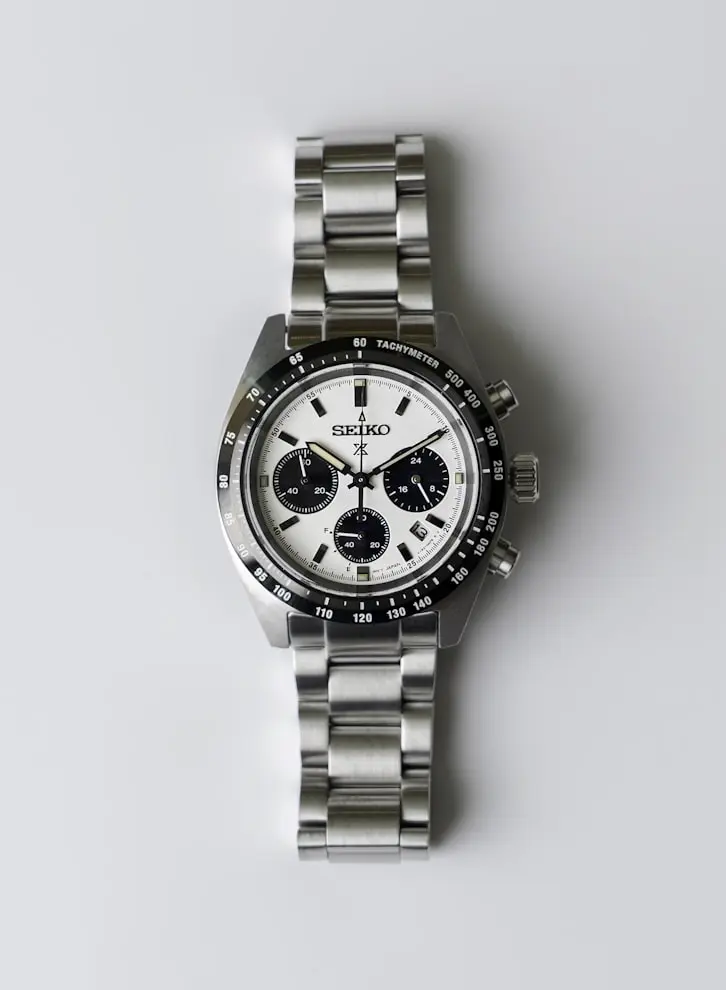
In the 1960s, the company produced high precision timing devices and stopwatches for sporting events around the world. This experience later inspired its wristwatches and chronographs.
A milestone was the 1969 Seiko Speedtimer, which featured an automatic movement with a column wheel and vertical clutch. These mechanisms contributed to the smooth and precise operation of the chronograph.
It is significant that this association exists between professional sports timing devices and wristwatch technology. Innovations were not just confined to laboratories or sidelines. They slowly made their way onto wrists.
The Wrist Chronograph Changes Everything
Pocket chronographs were not without their shortcomings.
An official might be able to wear one in a hand, but a wristwatch was far more convenient. It was possible to wear it, read it immediately, and use the chronograph without laying down another tool.
As the technology developed, Longines manufactured early wrist chronographs and helped to make the wrist-worn chronograph a serious timing tool.
The wrist also altered the way in which people used the mechanism.
Eventually two pushers were a common combination:
- The chronograph is started and stopped by the first pusher.
- The second pusher returns hands to zero.
- Subdials keep track of elapsed minutes or hours.
- The timing interval is measured by a central seconds hand.
This design is so well known that many people nowadays know a chronograph on the first sight, regardless of whether they use the feature or not.
1969: The Automatic Chronograph Race
One of the most significant chapters in the history of chronographs occurred in the late sixties.
A number of watchmakers were trying to find a solution to a serious challenge: How to incorporate an automatic winding system and a complicated chronograph mechanism in a functional wristwatch?
Several important automatic chronographs were launched in 1969.
Seiko's Speedtimer featured Calibre 6139, which was a combination of a column wheel and a vertical clutch. Seiko calls it the world's first automatic chronograph featuring such a combination of mechanisms.
Breitling and its partners also released the Chrono-Matic, and Zenith released the El Primero, which was renowned for its high-frequency 36,000 vibrations-per-hour movement.
It's not quite correct to say 1969 was the year of the first automatic chronograph, but it is fair to say that it was the year of several important firsts from several major manufacturers.
The outcome was pretty groundbreaking.
No longer would you have to wind the watch each time you wanted to use it. One possible use of the chronograph is to use it as part of an automatic wristwatch worn every day.
High-Frequency Chronographs Push Precision Further
Mechanical watchmakers were still searching for a means of measuring shorter intervals.
One answer was high-frequency movements.
A more rapid balance can enable a chronograph to break time up into smaller units. That does not make every aspect of a watch more accurate, but it can make the resolution of the elapsed time display better.
Such a search for speed eventually prompted watchmakers to try frequencies much greater than the mechanical movement.
The lesson was the one Louis Moinet had taught over a hundred years before: the smaller the interval you can measure, the more information you can get out of an event.
Iconic Chronographs That Defined Sports
Chronograph watches eventually became more than just professional timing devices and turned into cultural icons.
Several models were closely linked to racing, aviation and exploration.
Rolex Cosmograph Daytona
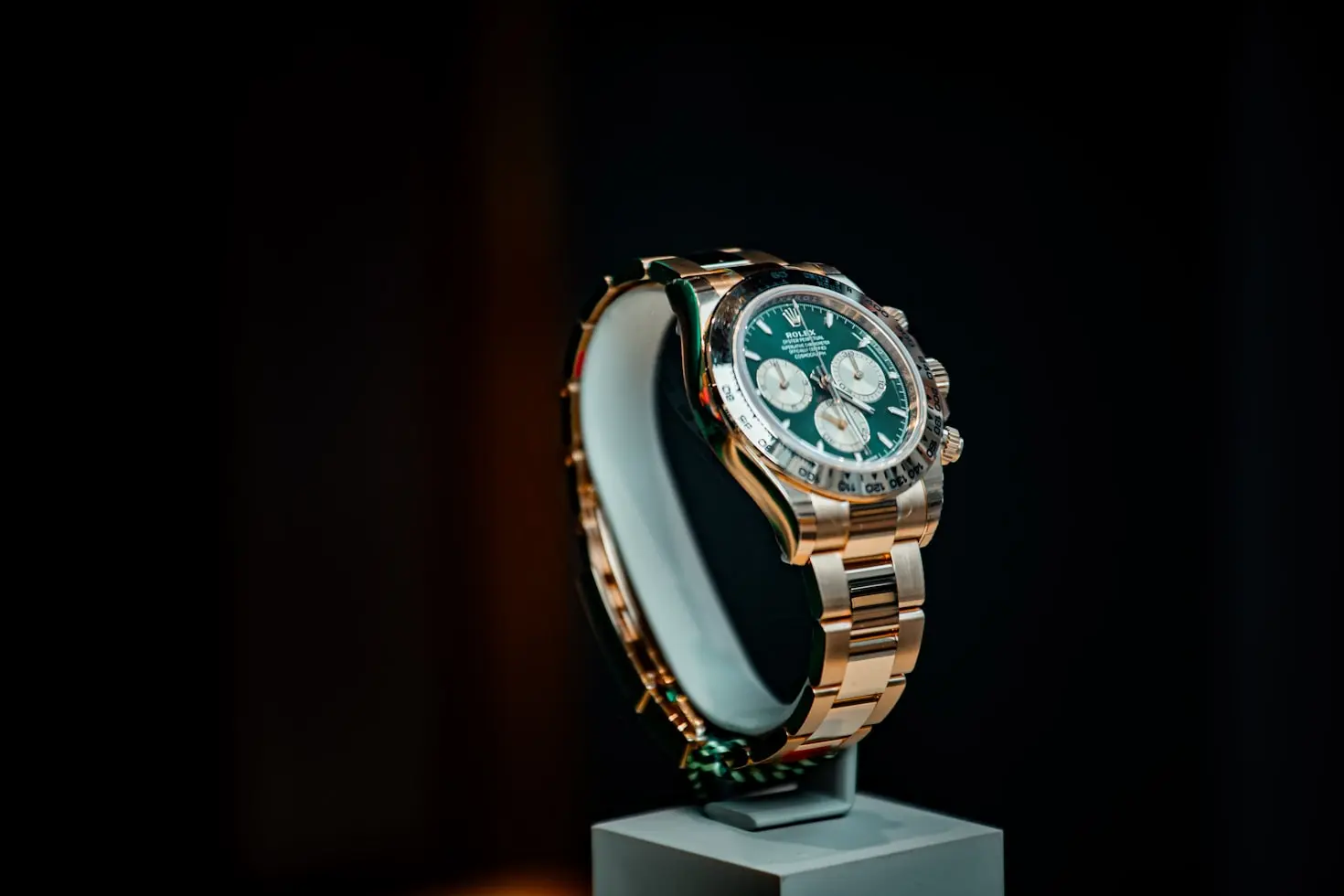
One of the best examples of the relationship between chronographs and motorsport is the Rolex Cosmograph Daytona.
The watch was launched in 1963 with the professional racing driver in mind. It has a tachymetric scale for measuring the average speed over a known distance with the chronograph function.
According to Rolex, the scale added to the Cosmograph Daytona allows it to track speeds up to 400 units per hour, based on the version and its use.
The Daytona has always been linked to endurance racing and motorsport.
It is very different from the original 1960s models in terms of its mechanical technology but the same in terms of its underlying concept—measure time, then use the measurement to understand performance.
Omega Speedmaster
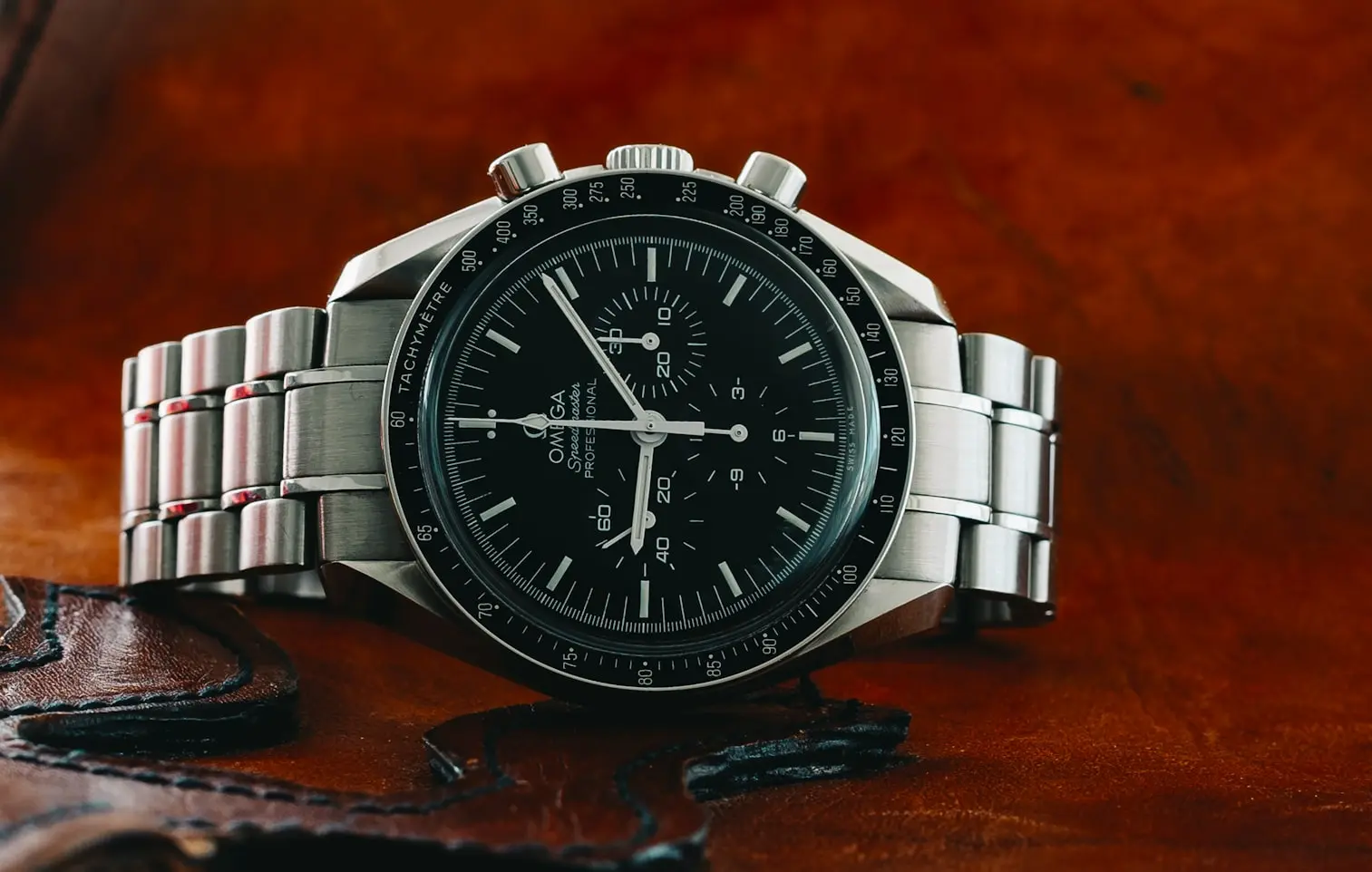
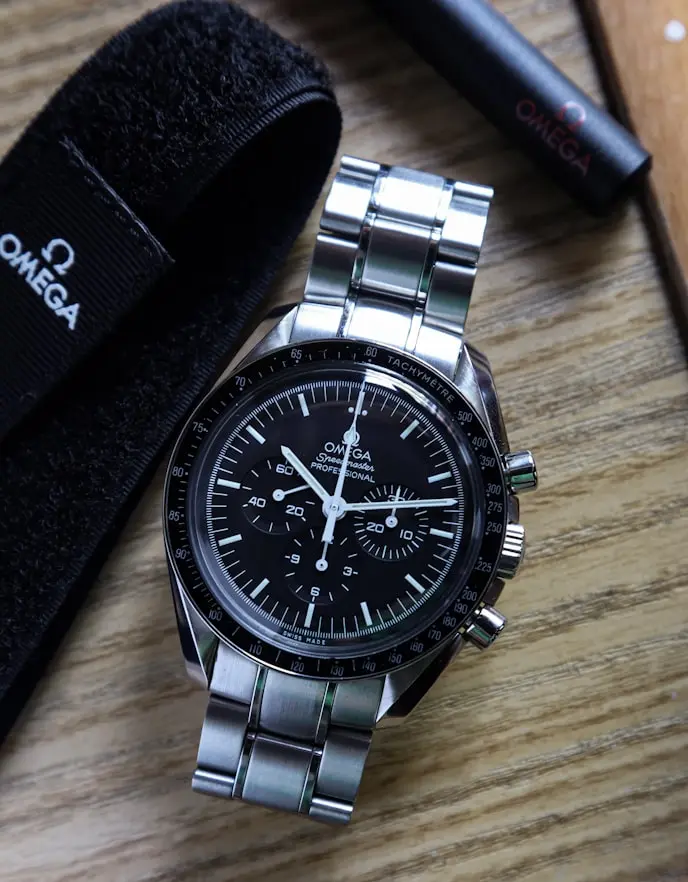
In 1957 the Omega Speedmaster was introduced as a sports chronograph and went on to become a legend for an entirely different reason.
It was linked to NASA's human spaceflight program and the Apollo missions and was known as “Moonwatch.”
That history shows how valuable a sports chronograph might be off the racetrack. A watch used for speed and elapsed-time measurement may eventually prove to be an important tool in an altogether different environment.
One of the best examples of the transition of chronograph technology from sport to exploration is the Speedmaster.
TAG Heuer Carrera
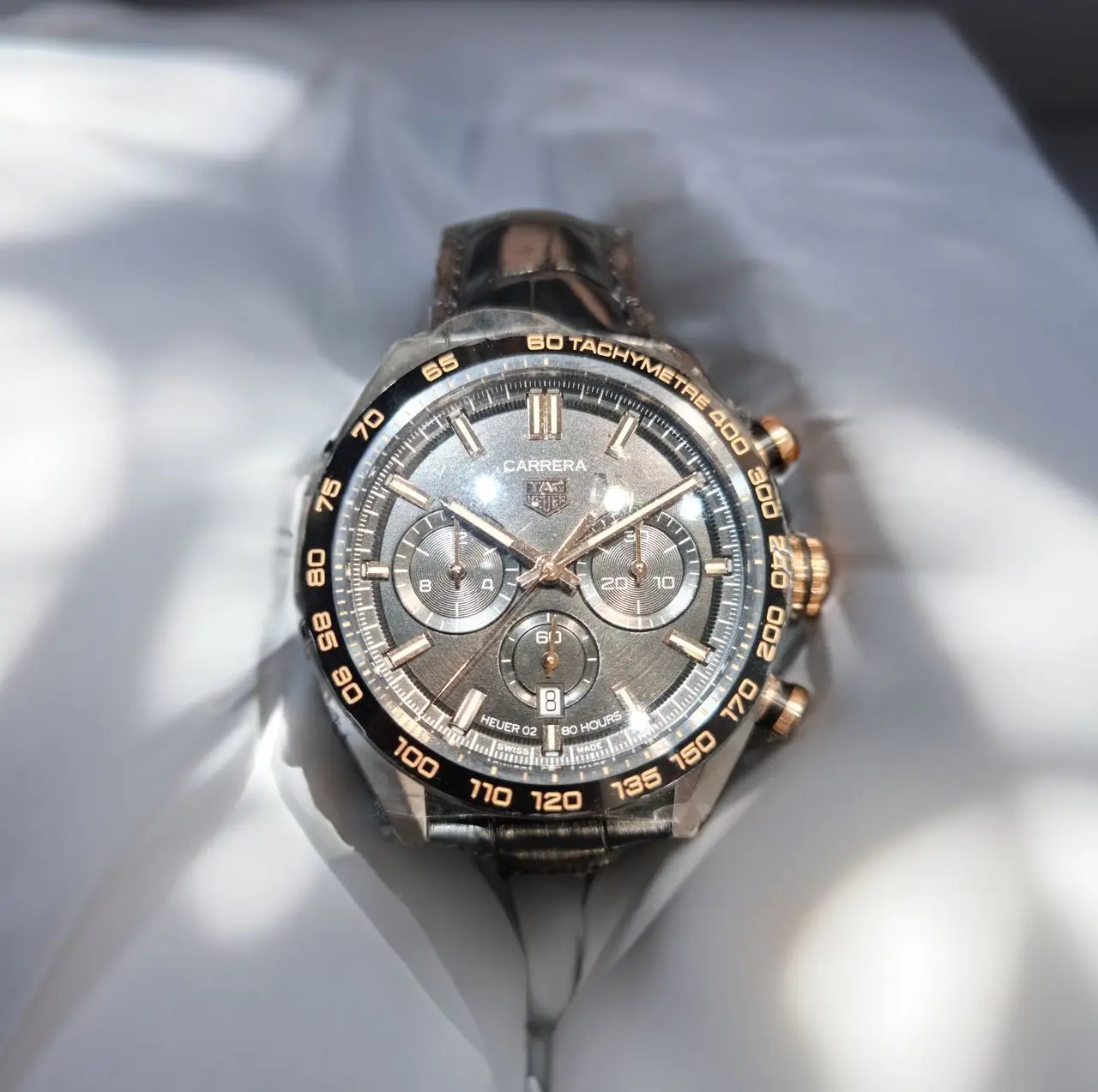
The Carrera was closely linked to motorsport since it was introduced in the 1960s.
It is named after the mythical Carrera Panamericana road race. The design was given a strong emphasis on legibility, which was well suited to the fast-paced environment of racing.
That became the sense of racing chronographs: a good sports watch must be mechanically capable as well. You should also be able to grasp it with ease.
Tag Heuer Autavia
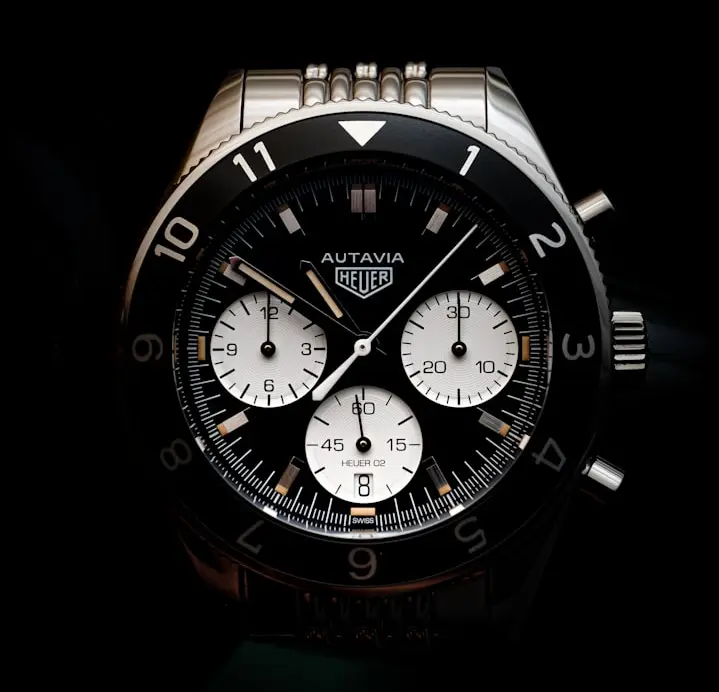
The Autavia has another significant role in the history of racing.
The name is a blend of “automobile” and “aviation”—the two worlds for which the watch was originally designed.
The Autavia quickly got into the world of motorsport and racing drivers. Its development also coincided with the general trend of replacing manually wound chronographs with automatic technology in the late 1960s.
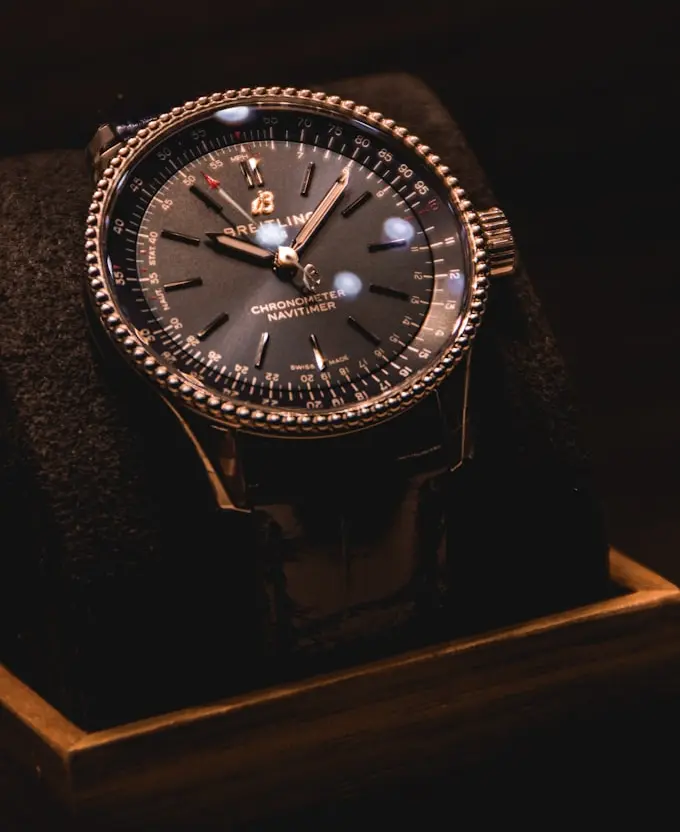
Breitling Navitimer
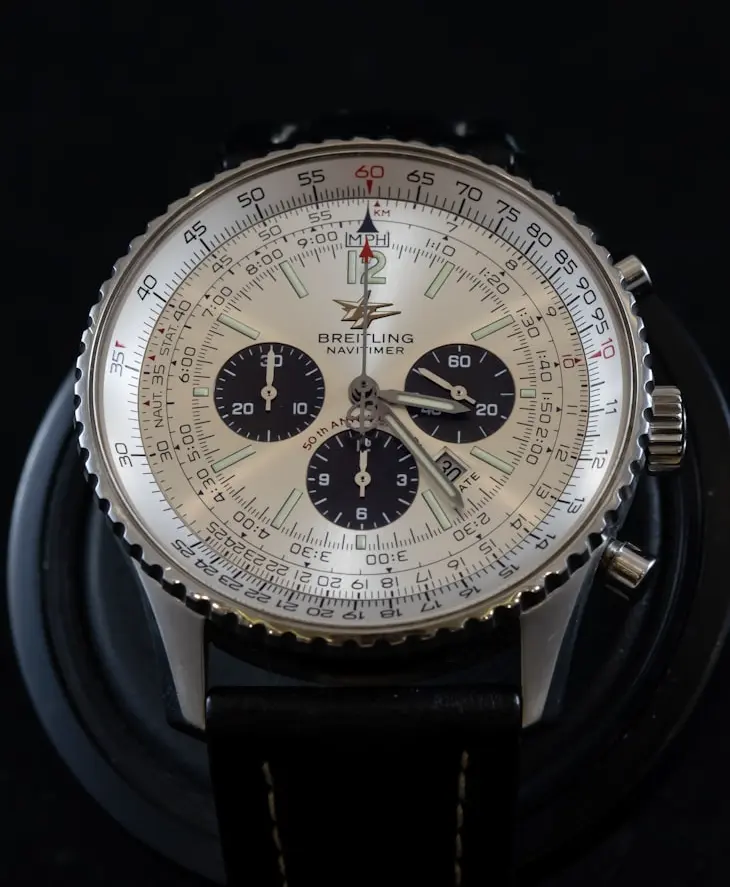
The Breitling Navitimer is an example of how chronograph technology could be applied to aviation, as well as sport.
In 1952, Breitling created the Navitimer concept for the Aircraft Owners and Pilots Association. It had a circular slide rule, which enabled the pilot to work out fuel, distance, speed, and other flight data.
While aviation has its own calculations, the concept was the same as in motorsport: that the watch was a working instrument, not just an accessory.
How a Chronograph Works
A chronograph is a watch that also has a stopwatch.
The chronograph will start measuring elapsed time when you push the start pusher. Press it again to end the measurement. The reset pusher will then push the chronograph hands back to their original positions.
The exact layout will depend on the movement.
There are two types of bicompax design and three types of tricompax design. Some chronographs feature a tachymeter scale; some feature a date, moon phase or extra timing scale.
Mechanical chronographs also have intricate systems to synchronize the start, stop, and reset functions.
The sequence of chronograph operations is controlled by a column wheel. A vertical clutch is used for smooth operation and less hand jumping to engage the chronograph. In Seiko's explanation of its chronograph movements, it points out how the vertical clutch helps to minimize unwanted hand movement at the start or stop of the stopwatch.
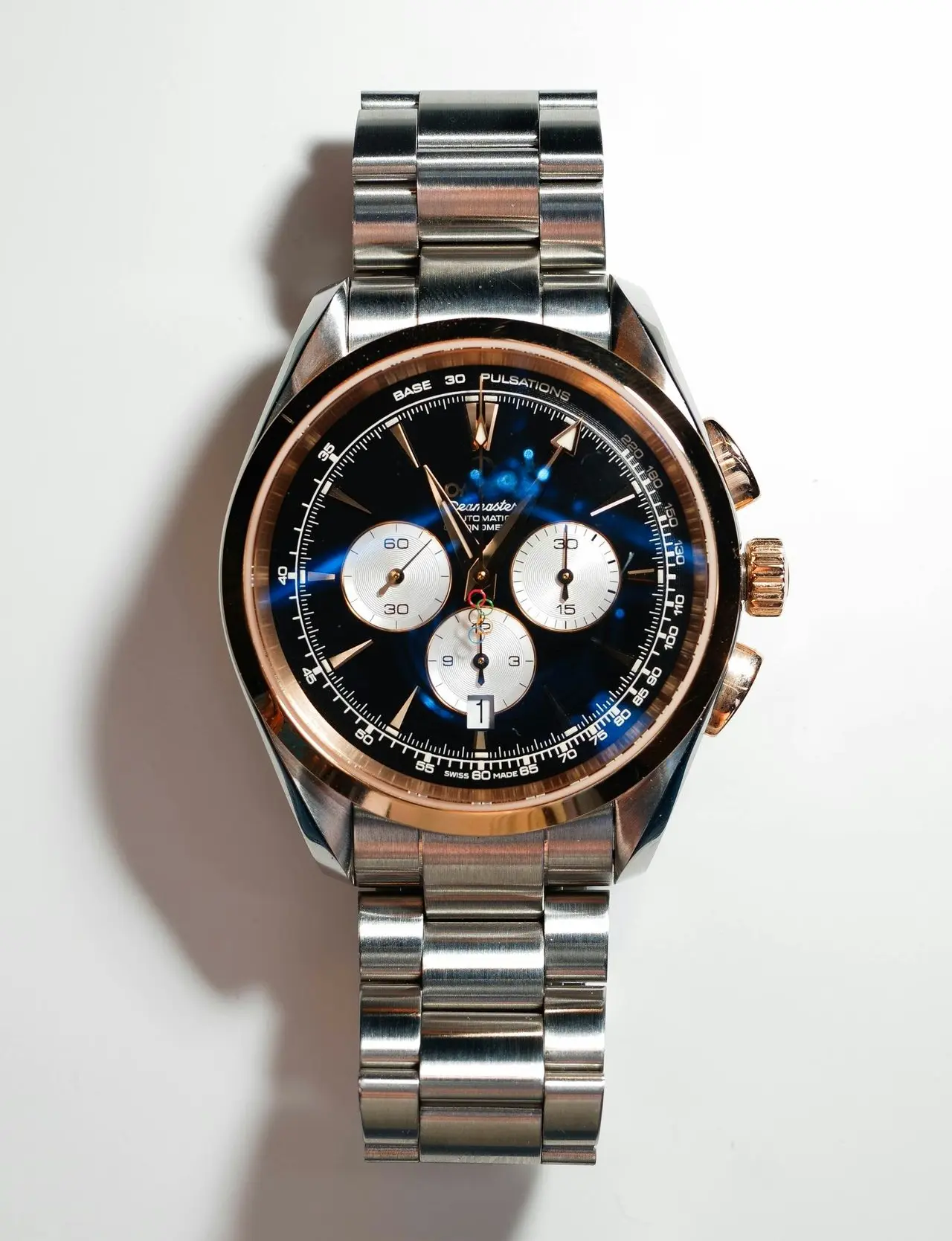
Now, the magic of a mechanical chronograph really comes into play. The three small circles on a dial may be indicative of a very complicated mechanical system beneath.
Chronograph vs. Chronometer
Although they sound alike, they are two different things.
Term | Meaning | Main Purpose |
Chronograph | A watch that has an elapsed-time measurement feature | Timing events |
Chronometer | A clock that conforms to specified accuracy requirements. | Measuring time accurately |
Tachymeter | A scale that uses elapsed time | Calculating average speed |
Stopwatch | A special timekeeping device | Measuring elapsed time |
While a chronograph can also be a chronometer, the reverse is not true.
It is important to know the difference when buying a mechanical watch. A chronograph gives you information on functionality. A chronometer designation provides information on the precision that has been tested in accordance with the applicable certification standard.
Why Chronographs Became So Important in Sports
The chronograph was important because competitive sports rely on measurable performance.
Several seconds can make the difference in a race. In elite times, the split can be in hundredths or thousandths of a second.
The chronograph technology enabled sports officials to answer basic questions:
- How many seconds did the athlete take?
- Who finished first?
- What speed was the competitor's velocity?
- By how much was one performance faster than the other?
- Was a record set by an athlete broken?
Later mechanical chronographs were supplemented by electronic timing, photo-finish systems, quartz technology, and computer based measurement.
In today's world of elite sports, it's not just about wristwatches. But the chronograph contributed to the culture of precise elapsed time measurement, which these systems built upon.
From Professional Tool to Everyday Wristwear
You don't have to be a racing driver or Olympic official to enjoy a chronograph today.
You can use one to time a workout, keep track of a cooking process, time a short presentation, or just explore the mechanical function of your watch.
But for many aficionados, the experience is the attraction.
By pushing the chronograph pusher, you have a direct connection to the mechanism. The seconds hand can be seen moving, elapsed time can be read on the subdial and the mechanical action can be felt when stopping and resetting.
That interaction is something that a smartphone timer can't exactly replicate.
While a phone might be more convenient for day-to-day timing, a mechanical chronograph offers something else: a tangible and visual experience of traditional watchmaking.
The Lasting Legacy of the Sports Chronograph
The chronograph watch is a watch that is really the solution to increasingly complex timing challenges.
In 1816, Louis Moinet invented an instrument for astronomical observations that was extremely precise. Timing technology found a sporting use in horse racing. Motorsport drove the watchmakers towards readability and speed measurement. As the Olympic Games became more complex, they required more complex timing systems. Chronograph functions became commonplace on everyday wrists with automatic movements.
Although the technology evolved, the basic intent remained relatively unchanged.
Measure elapsed time. Convert that measurement into valuable information. Improve performance.
This is why the chronograph is still a very significant complication.
At Leitzeit we value this history because it demonstrates the results of function influencing design. The subdials, pushers, scales and mechanical details on today's chronographs are not just for show. They are the descendants of generations of watchmakers who have sought to make time measurable in ever more precise ways.
The chronograph has become one of the most popular and useful complications in watchmaking, from the racetrack to the Olympic arena and from mechanical stopwatches to wristwatches.
Even if you wear one just for the fashion, you're wearing a little of that sports history on your wrist.
FAQs About Chronograph Watches
What is a chronograph watch?
A chronograph watch is a timepiece that has a stopwatch feature. It can be used to start, stop and reset the elapsed-time measurement while keeping the normal time displayed on the watch face via its pushers.
Why are chronograph watches used in sports?
Chronograph watches are capable of measuring elapsed time, making them ideal for timing races, laps, training sessions, and other performance events. Mechanical chronographs and stopwatches were significant in the past before electronic timing systems took over.
Who invented the first chronograph?
In 1816 Louis Moinet finished the world's first chronograph. His compteur de tierces was an instrument for astronomical observations and was capable of measuring very short periods.
What is the difference between a chronograph and a chronometer?
A chronograph is a watch that tracks time. A chronometer is a watch that has been through a recognized precision-testing process. A watch can possess both the characteristics, but they refer to different qualities.
How does a tachymeter work on a chronograph?
A tachymeter is a device that measures average speed by measuring the elapsed time for a known distance. For instance, if you time the trip of a vehicle over one kilometer, you will be able to determine the average speed on the tachymeter scale. A famous example of a chronograph that has a tachymetric scale for this use is the Rolex Cosmograph Daytona.
Are chronograph watches still useful today?
Yes, although their role has changed. Although now used extensively in professional sports, chronographs are still useful for everyday timing and continue to be one of the most important complications in mechanical watchmaking.
Why do chronographs have small subdials?
The subdials indicate various sections of the elapsed time. They can show chronograph minutes, hours, or running seconds, depending on the movement. The exact arrangement of these differs from movement to movement and watch to watch.
Why are mechanical chronographs considered complicated watches?
Mechanical chronograph watches need to synchronize the basic timekeeping system with a secondary timing system. The chronograph is more complex than a simple time-only movement, requiring multiple components to function in perfect harmony to start, stop and reset the time.