For enthusiasts of automatic watches, opinions about watch winders are often divided. These visually appealing devices first appeared on the market in the 1920s making them much younger than most developments in traditional watchmaking. Some collectors swear by them, while others view them with skepticism. So, which approach is correct? Do you really need an automatic watch winder, or is it just a passing trend?
First: How does a watch winder?
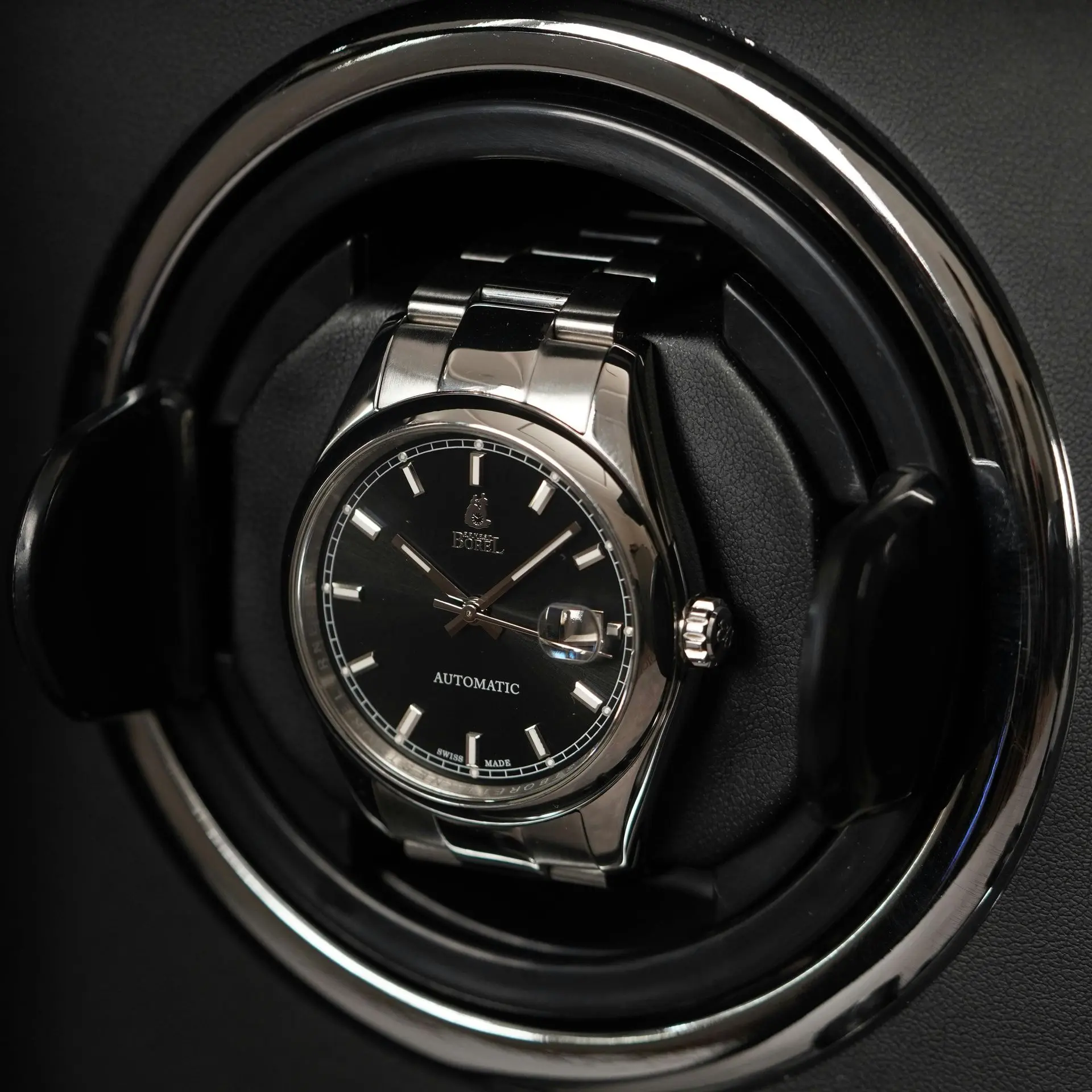
Automatic watches are designed in a way that they are self-winding. A Rotor Inside the watch uses the natural motion of your wrist to tighten the mainspring and to keep the timer going. A watch winder mimics this movement is Essentially to set up your automatic watch then wound remains if you do not wear.
An automatic watch winder
has a small engine with a rotary plate is connected to the clock slowly rotates. Many of the winder have intermittent rotation patterns with customizable speed settings. You can with AC or DC power to be operated, the battery life of the respective manufacturer and model dependent.
You really need a watch winder for one automatic watch?
This is the question that divides watch enthusiasts. The short answer: no, you don’t need a watch winder—just as you don’t need a car if you prefer to walk. You can always wind your watch by hand whenever it stops. A watch winder simply adds convenience and keeps your watch ready for use.
Some argue that winders save time, especially for those with extensive collections. The purpose of a winder is to keep your watch in a ready-to-use state at all times—but that’s not the only reason people buy them.
Two common myths about the watch winder put to the test
Watch winders keep your watch lubricated
Mechanical watches are complex masterpieces of engineering. They contain tiny gears, springs, and bearings that need lubrication. Many lovers of watch winders say that they use these devices to prevent the lubricating oil from gumming up in their watches. The idea behind this is that a watch winder keeps the mechanism running smoothly, even if the watch is not being worn.
This is simply not true. Today, watchmakers use synthetic oils as lubricants that do not thicken or lose quality like mineral oils. Modern watches can safely stop without having to worry about clumped oil or damage to the movement.
A watch winder leads to over-winding your watch
On the other hand, some believe that using a watch winder harms the watch more than letting it simply stop. This myth is based on the idea that constant movement over-tensions the mainspring and puts pressure on the delicate internal components.
In reality, it is impossible to over-wind an automatic watch. A winder will not damage the movement, no matter how long you rotate your watch. Modern automatic watches have built-in protection mechanisms like a slipping clutch and stop system. These mechanisms prevent the movement from affecting the mainspring once it reaches maximum tension.
Where watch winders shine: Complications and perpetual calendars
If watch winders neither cause damage nor provide additional mechanical protection, what are they actually good for? The average watch owner may not miss a winder if they do not have one. However, for serious collectors of watches with numerous complications, a winder can save significant time.
Watches with perpetual calendars can be especially difficult to reset once they have stopped. Here, the use of a winder is ideal. The movement of the winder keeps the watch running so that the dates continue correctly even when the watch is stored.
Watch winders as display cases
Whether or not you like watch winders, it cannot be denied that they make excellent display cases. Some models even become collectibles themselves, giving watch enthusiasts another reason for excitement. The design of a winder can be as elegant as the timepiece it houses, adding extra shine to a luxury collection.
Some argue that a winder is the best place to store an automatic watch. The winder protects it from dust and moisture and keeps the timepiece on a padded display, which will not cause scratches or wear on the metal finish.
Watch winder vs. Manual Winding
Despite the online hype, it is important to remember that you do not need a winder to own an automatic watch. A winder is a handy extra that can replace manual winding, which you have to do under certain circumstances from time to time.
|
Watch winder
|
Manual Winding
|
|
Ideal for large collections |
Ideal for smaller collections |
|
Saves time; keeps your watches in a convenient, ready-to-use condition
|
Can be time-consuming, especially for watches with complications
|
|
Settings may have to be adjusted according to the watch model and brand
|
Uses the built-in winding crown, specifically tailored to your watch
|
The final verdict on watch winders
Watch winders will always be a controversial topic among collectors. In our eyes, they are entertaining gadgets that deserve recognition for their role as a topic of conversation within the watch community. It is not wrong to have a watch winder, but it is by no means a prerequisite to be part of the world of watches.
Automatic watches are designed to keep time while you are wearing them, and nothing bad happens if they stop. Ultimately, there is more than one way to wind a watch. Some methods are simply more stylish than others.